
Silverweed
Potentilla anserina L.
Description
Growing requirements
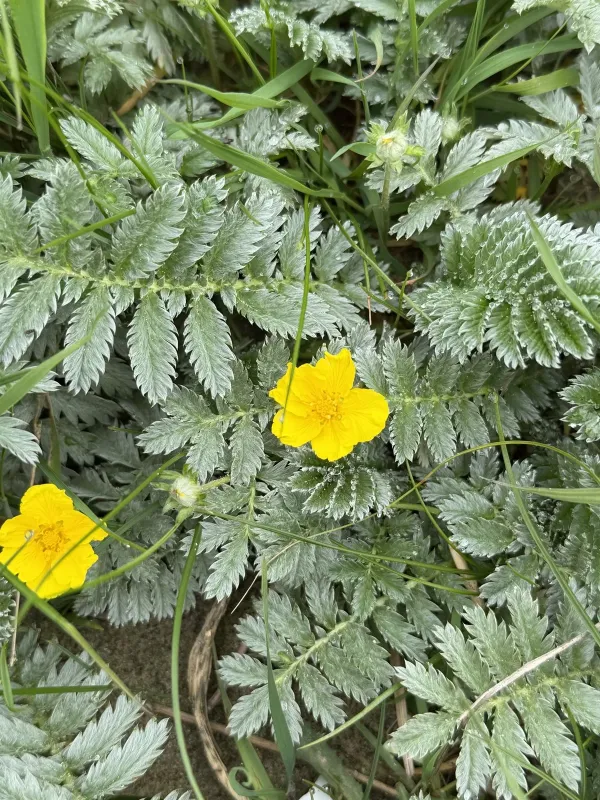
Silverweed (Potentilla anserina L.) is a perennial herbaceous plant belonging to the Rosaceae family. It is widely recognized for its creeping stems, which form dense mats, and its ability to spread rapidly through runners.
Native to the Northern Hemisphere, this plant thrives in temperate climates. It is commonly found in damp areas, including riverbanks, meadows, and pastures. It adapts well to various soil types, provided they remain sufficiently moist throughout the growing season.
The cultivation of Silverweed requires careful management of soil moisture. While it is hardy and capable of surviving harsh winters, it responds positively to fertile, well-draining soils that are rich in organic matter, which enhances vegetative growth.
Agrotechnical practices focus on controlling weed competition during the establishment phase. As the plant forms a ground cover, it effectively suppresses many weeds on its own, but initial maintenance is crucial for ensuring a uniform and high-quality yield.
The primary economic use of Silverweed is in the herbal and pharmaceutical industries. It is valued for its pharmacological profile, including significant astringent and anti-inflammatory properties, which are used to treat various digestive and health conditions.
Yield
Yields of dried aerial parts are consistent when the plant is grown under optimal moisture conditions. By managing the density of the runners, growers can maximize the production of biomass harvested annually.
Main diseases and pests
The culture is generally resilient to pests. However, it can be susceptible to fungal diseases such as powdery mildew under conditions of high humidity and poor air circulation. Regular monitoring and site management are effective prevention strategies.
Harvesting
Harvesting takes place during the flowering period, typically between late spring and mid-summer. The aerial parts are cut and processed, ensuring that the roots remain intact to allow the plant to regenerate for future harvesting cycles.