
Dwarf cinquefoil
Potentilla canadensis L.
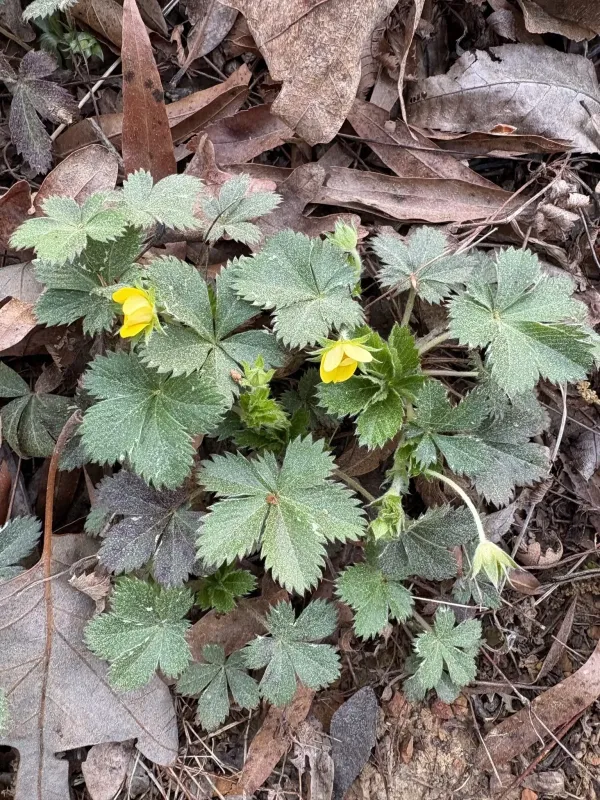
Description
Growing requirements
Dwarf cinquefoil (Potentilla canadensis L.) is a perennial herbaceous plant belonging to the Rosaceae family. It is native to eastern North America, where it thrives in open woodlands, meadows, and areas with well-drained, nutrient-poor soils.
The plant is characterized by its prostrate growth habit, featuring creeping stolons that root at the nodes. This morphological adaptation allows it to create dense mats of foliage, making it a highly effective species for soil stabilization and landscape engineering.
Regarding environmental requirements, the plant prefers sandy, acidic to neutral soils that do not retain excess water. While it displays remarkable drought tolerance, consistent moisture during the establishment phase is beneficial for the development of a robust root system.
Cultivation practices involve selecting sunny to semi-shaded locations with adequate air circulation. The plant is valued for its minimal maintenance requirements, as it rarely needs chemical fertilization or intensive pruning in sustainable landscape applications.
The species serves various purposes in agriculture, including erosion control on slopes and acting as a living mulch that suppresses weed growth. Its ability to colonize difficult terrains makes it a valuable asset for environmental restoration projects.
Main diseases and pests
The primary pathological threats for Potentilla canadensis include powdery mildew, which tends to proliferate in environments with high humidity and stagnant air.
Leaf spot diseases may occur under stress conditions, potentially causing defoliation if left unmanaged during prolonged periods of wet weather.
Pest populations, specifically spider mites and aphids, can cause significant damage to the plant's succulent foliage during hot and arid summer months.
Root-knot nematodes can occasionally impact the plant's health, causing stunted growth and reduced vigor within established stands.
Integrated pest management strategies focusing on cultural control and proper spacing are recommended to maintain the long-term health and vitality of the cinquefoil.