
Spring cinquefoil
Potentilla neumanniana Rchb.
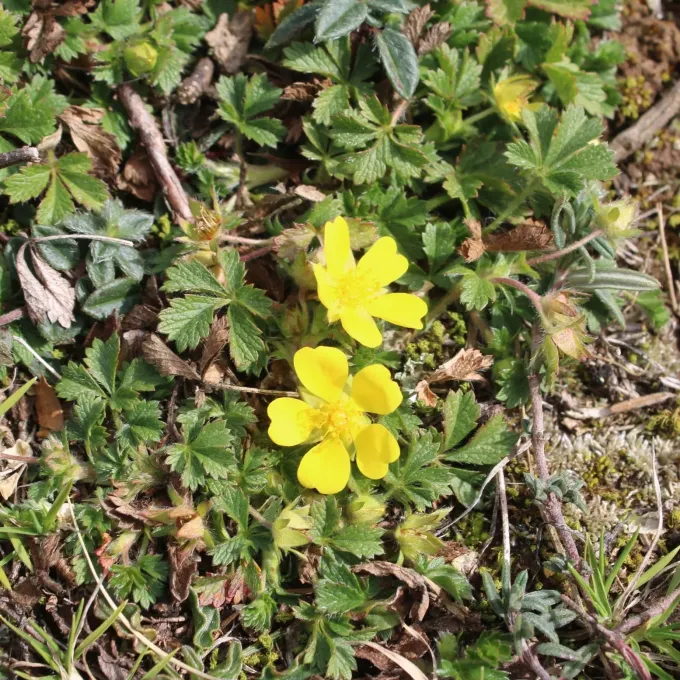
Description
Sowing dates
Seeds of the spring cinquefoil should ideally be sown in the autumn, as a period of cold stratification is essential for breaking dormancy and successful germination.
When starting seeds indoors in the spring, it is necessary to store them in a refrigerator for at least one month to mimic natural winter conditions.
Division of established clumps is a more reliable method for commercial or garden propagation, best performed in early spring or late summer to ensure root establishment.
Young plants are typically spaced at intervals of 20 to 30 centimeters, which allows them to eventually merge into a dense, weed-suppressing carpet.
As a member of the Rosaceae family, this species is well-known for its adaptability and ability to thrive in poor soil conditions where other crops fail.
Growing requirements
Spring cinquefoil thrives in full sun exposure, which is critical for maximizing its flowering capacity and maintaining a compact, healthy growth habit.
Well-draining, sandy, or rocky soil is a primary requirement, as the plant is highly susceptible to root rot in waterlogged or heavy clay environments.
It is remarkably drought-tolerant once established, making it an excellent candidate for xeriscaping and areas with limited access to supplemental irrigation.
The plant performs best in neutral to slightly alkaline soil conditions, which reflects its natural habitat on dry, stony slopes across the European continent.
Fertilization is rarely necessary for this species, as excessive nitrogen levels can lead to weak, leggy growth rather than the desired compact floral display.
Main diseases and pests
The main threats to crop health are fungal diseases, such as leaf spot and various rots, which usually occur during prolonged periods of high humidity.
Poor air circulation, often caused by planting too densely, is a significant risk factor for the development of powdery mildew and other foliar issues.
Insect pests, including aphids and spider mites, may become an issue during hot, dry weather, requiring prompt attention to prevent plant stress.
Effective management includes regular monitoring of foliage health and avoiding overhead irrigation that leaves leaves wet for extended periods at night.
Sanitation practices, such as removing debris and thinning out dense patches, are essential strategies for maintaining disease-free growth throughout the season.