
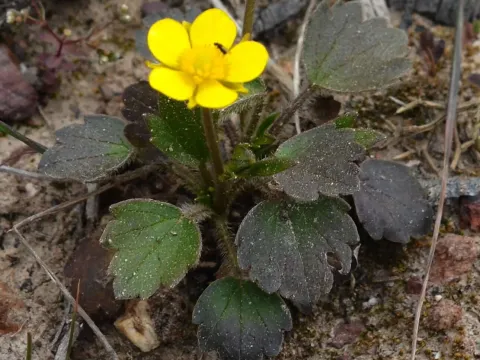
Ranunculus gregarius
Ranunculus gregarius
Ranunculus gregarius is a herbaceous perennial belonging to the Ranunculaceae family. While not a conventional agricultural commodity, understanding its lifecycle is crucial for integrated meadow management and ecological farming practices where this species may be present.
What the section contains
Ranunculus gregarius
Sowing typically occurs in early spring once soil temperatures reach a steady 5-8°C. The seeds possess a hard seed coat, necessitating stratification in a moist environment for several weeks to break dormancy and ensure uniform emergence in the field.
Seeds should be sown at a shallow depth of 0.5 to 1 cm. Due to their small size, they are sensitive to competition from vigorous weed species; therefore, ensuring a clean seedbed before planting is a fundamental prerequisite for successful establishment.
During the first growing season, the plant develops a basal rosette. Growth is intentionally slow, as the plant invests energy into building a robust root system before shifting resources to vertical shoot development in subsequent years.
Row spacing should be maintained at 15-20 cm to ensure adequate space for each plant. Proper spacing promotes air circulation around the crown of the plant, which is essential to mitigate the risk of leaf diseases caused by stagnant humidity.
The species has specific ecological requirements, thriving primarily in moist to semi-aquatic habitats. It acts as an indicator plant for high soil moisture levels, preferring sites where water is readily available throughout the growing season.
Rich, loamy soils or peat-based substrates provide the best growth conditions. The plant prefers neutral to slightly acidic soil pH, though it exhibits significant plasticity and can adapt to varying chemical compositions if moisture levels are adequate.
High light intensity is preferred for optimal biomass production. While it can survive partial shade, its competitive advantage in a community decreases under limited light, often causing the plant to remain stunted in dense grass stands.
Soil aeration is of secondary importance to moisture but remains vital. Avoiding soil compaction is necessary to prevent anaerobic conditions in the root zone, which can inhibit nutrient uptake and trigger premature senescence of the foliage.
Nutrient management should focus on balanced P-K fertilization to enhance structural integrity. Excessive nitrogen application is discouraged as it tends to favor weed colonization over the delicate establishment of this specific Ranunculus species.
Fungal diseases are the primary threat, specifically powdery mildew and leaf spot pathogens that proliferate during periods of high humidity and moderate temperatures. These infections quickly degrade the foliage quality.
Insect pests, including various leaf beetles and aphids, frequently target the succulent leaves. Infestations can reach economic injury levels if not managed during the rapid growth phase of the early summer months.
Root system health can be compromised by soil-borne pathogens and nematodes, especially in fields with poor drainage. Proper crop rotation and field sanitation are the primary tools for mitigating these long-term threats to plant vitality.
It is critical to note that the plant contains protoanemonin, an acrid compound common to the Ranunculus genus. This toxicity limits its use as livestock fodder, and grazing management must account for its presence in natural pastures to prevent poisoning.
Integrated pest management (IPM) strategies, including biological control agents and localized application of fungicides, are recommended. Monitoring field margins is essential, as these often serve as primary infection sources for the inner crops.