
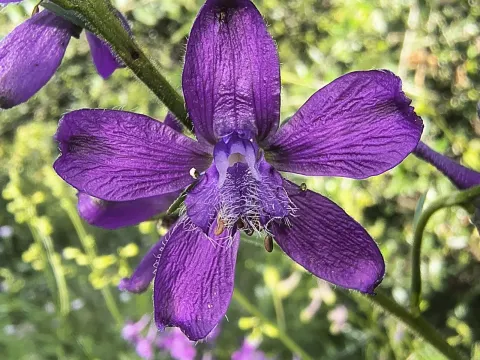
Delphinium pentagynum
Delphinium pentagynum
The propagation of Delphinium pentagynum requires a stratification period to break seed dormancy. Sowing is typically performed in late winter under controlled indoor conditions to ensure optimal germination rates.
What the section contains
Delphinium pentagynum
Seeds should be sown in a well-draining, sterilized potting medium. A light covering of soil is sufficient, as the seeds need a stable environment to develop the radical without being buried too deeply.
Germination usually occurs within 2 to 4 weeks if temperatures are maintained between 15 and 18 degrees Celsius. Providing consistent moisture during this stage is essential for successful seedling establishment.
Once seedlings have developed two sets of true leaves, they are transferred into individual pots. This practice encourages a strong root system, which is vital for the plant's long-term health when moved to the field.
Outdoor sowing is also possible in early autumn. This allows for natural cold stratification over the winter, resulting in vigorous seedlings that emerge in early spring once soil temperatures rise.
Delphinium pentagynum thrives in fertile, well-draining soils with a neutral or slightly alkaline pH. Proper aeration is crucial to prevent root zone suffocation and ensure the plant's longevity.
The site must provide full sunlight exposure to support robust growth and heavy flowering. Sheltered locations are preferred to protect the delicate flower spikes from damage caused by high winds.
Regular irrigation is necessary throughout the growing season, particularly during dry spells. However, it is important to apply water directly to the base of the plant to keep the foliage dry.
Soil fertility should be managed through periodic fertilization. Balanced NPK fertilizers applied during early spring and just before the onset of flowering will help maximize the display and plant health.
In terms of winter care, the base of the plant benefits from a layer of organic mulch. This provides insulation against freezing temperatures and protects the crown from excessive frost damage.
Powdery mildew is the most common fungal disease associated with this species. Management involves increasing airflow through regular thinning and applying appropriate fungicides if symptoms appear on the foliage.
Root rot is often the result of poor drainage or overwatering. Maintaining a strict irrigation schedule and planting in raised beds can significantly mitigate the risk of root-related pathogens.
Delphinium-specific pests, such as leaf miners, pose a significant threat during the spring growth flush. Integrated pest management, including the use of systemic insecticides, is recommended for effective control.
Slugs and snails frequently target young shoots. Protective measures, such as copper bands or eco-friendly baits, are necessary to prevent extensive damage to the young plant structure.
Viral infections may manifest as stunted growth or mottled leaves. As there is no cure, the best strategy is the removal and destruction of symptomatic plants to prevent spread to the rest of the crop.