
Delphinium retropilosum
Delphinium retropilosum
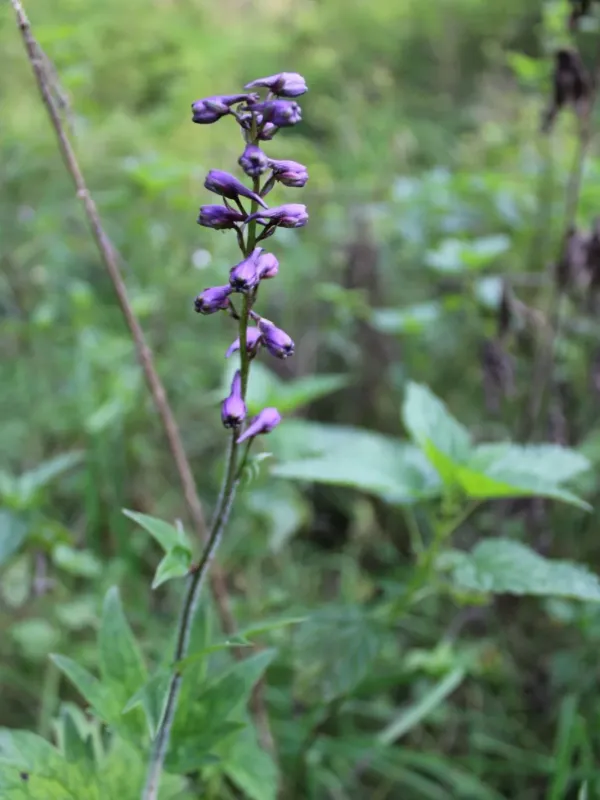
Description
Sowing dates
Delphinium retropilosum belongs to the Ranunculaceae family and is a perennial herb. Successful cultivation requires pre-sowing seed stratification to break dormancy and ensure uniform germination rates.
Sowing in open ground is typically performed in late autumn, allowing the natural winter cycle to stratify the seeds, or in early spring using artificially chilled seeds.
The seeds should be sown shallowly, with a covering of no more than 1 cm of light, fertile soil, as they require specific conditions to trigger growth after dormancy.
Row spacing should be maintained at 40–50 cm to ensure adequate airflow, which is critical for preventing fungal diseases as the plants grow larger throughout the season.
For nursery production, seeds can be started in seedling trays under controlled greenhouse conditions, followed by hardening off before transplantation into the field.
Growing requirements
This species thrives in temperate climates and requires well-drained, fertile soil with a neutral to slightly alkaline pH to reach its full development potential.
The plant prefers sunny locations with some protection from strong winds, as the tall flower stalks are susceptible to breaking if exposed to severe weather.
Watering must be regular and consistent, especially during the peak growing season, but it is vital to avoid waterlogging the roots, which leads to immediate decay.
Agricultural management requires the incorporation of compost or well-rotted manure before planting and regular application of balanced NPK fertilizers during the spring.
Mulching the base of the plants helps retain soil moisture and suppresses weeds, reducing the need for intensive mechanical cultivation around the delicate root zones.
Main diseases and pests
Powdery mildew is a common issue for this species, particularly in environments with poor air circulation, high humidity, and significant temperature fluctuations between day and night.
Root and crown rot are serious threats caused by persistent soil moisture and fungal pathogens such as Pythium or Fusarium, which can kill entire plants within a few weeks.
Slugs and snails are the most prominent pests, often destroying young foliage early in the spring, making protective measures essential in the early stages of growth.
Aphids and mites can also infest the plants, causing leaves to curl and yellow, which significantly diminishes the plant's overall health and vigor during the summer.
Integrated pest management strategies, including site hygiene and the use of appropriate fungicides or insecticides, are recommended to maintain plant health throughout the season.