
Puccinellia iberica
Puccinellia iberica
Description
Growing requirements
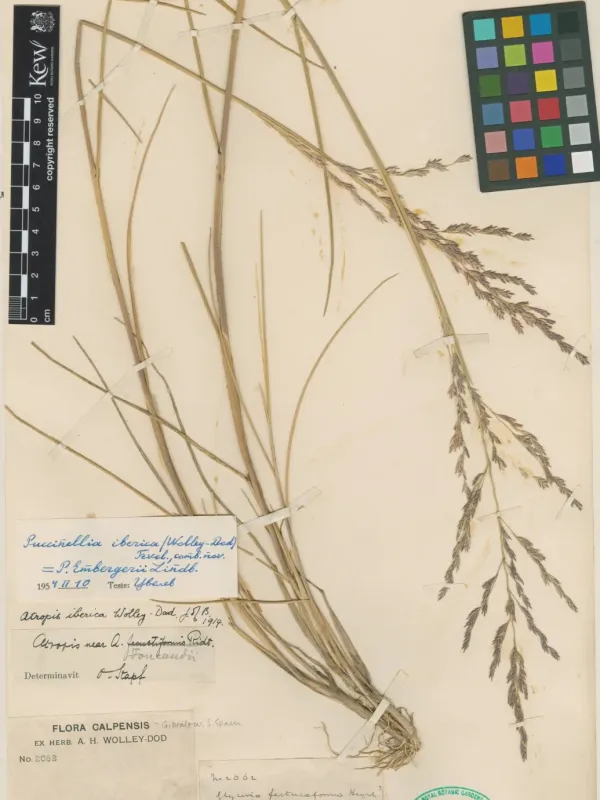
Puccinellia iberica is a perennial grass species belonging to the Poaceae family. It is a specialized halophyte, naturally evolved to thrive in environments with high salt concentrations that would prove lethal to most agricultural crops.
The native range of this species is primarily centered on the Iberian Peninsula. It typically populates coastal meadows, inland salt marshes, and periodically flooded areas where soil salinity levels remain persistently high.
Botanically, the plant is characterized by a dense tufted growth habit and narrow, often involute leaves. These features are evolutionary adaptations to minimize water loss and manage ion transport in saline substrates.
The cultivation of this grass requires well-lit conditions. While it exhibits extreme tolerance to salinity, it performs best when soil moisture is consistent, especially during the early stages of its growth cycle in spring.
Agricultural management is generally low-intensity. It is not recommended for fertile, non-saline agricultural land due to its lower biomass production compared to conventional forage grasses; rather, it is intended for land recovery and stabilization.
Yield
The primary economic use of Puccinellia iberica is as a forage crop for pasture improvement in areas where soil salinity precludes the cultivation of traditional pasture species. It provides reliable grazing options for livestock.
Its nutritional value is considered moderate but consistent throughout the growing season. It is particularly valued in extensive grazing systems where resilience to environmental stress is more important than maximum yield.
Beyond its use as fodder, the plant acts as a vital tool for environmental engineering. Its dense root network stabilizes the topsoil, preventing wind and water erosion in harsh, salt-affected ecosystems.
Yield stability depends heavily on the maintenance of soil structure. Over time, the presence of Puccinellia iberica can improve soil porosity, eventually facilitating the colonization of less salt-tolerant plant species.
Effective management involves controlled grazing schedules to ensure the plant can replenish its carbohydrate reserves, ensuring the longevity of the stand over multiple years.
Main diseases and pests
Puccinellia iberica exhibits a robust natural resistance to most common fungal and bacterial diseases that affect cereal crops. Its physiological adaptation to salinity appears to create an inhospitable environment for many pathogens.
Minor outbreaks of rust fungi may occur under conditions of extremely high humidity and poor air circulation within the stand. This is rarely a limiting factor for the survival of the plant, however.
Pests such as grass-feeding insects may occasionally utilize the plant as a food source, but they rarely reach density levels that cause economic damage or require chemical intervention.
The most significant threats to the crop are anthropogenic in nature, specifically overgrazing and the mismanagement of soil salinity through improper irrigation or chemical contamination.
Preventive care focuses on maintaining healthy soil moisture and avoiding excessive nitrogen applications, which can disrupt the plant's natural balance and increase susceptibility to opportunistic infections.