
Puccinellia festuciformis
Puccinellia festuciformis
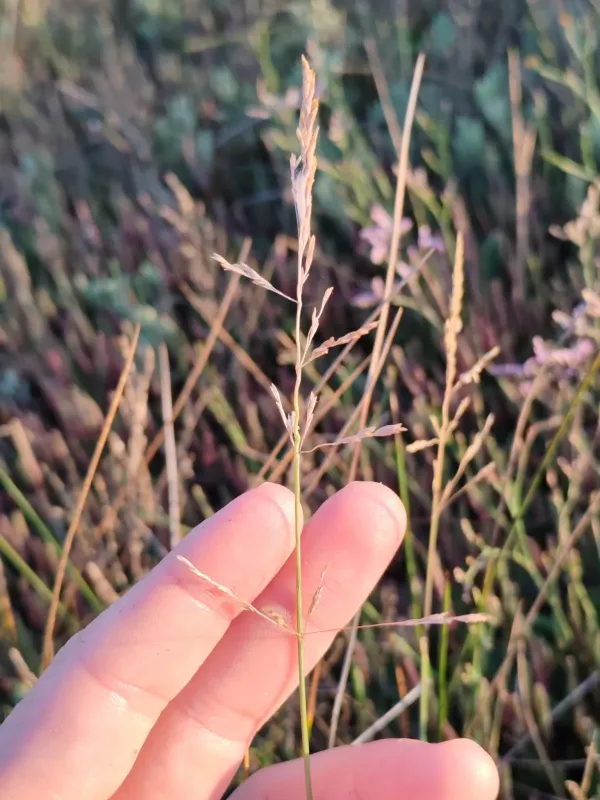
Description
Growing requirements
Puccinellia festuciformis is a perennial grass belonging to the Poaceae family. This species is highly regarded for its extreme tolerance to saline environments, making it a key plant for ecological restoration and forage in challenging soils.
The plant originates from coastal and inland saline habitats where soil salinity prevents the growth of traditional agricultural crops. It has adapted to withstand high concentrations of salts in the soil solution by developing efficient physiological mechanisms for sodium management.
Morphologically, it forms dense tufts or tussocks, which are effective at stabilizing soil surfaces and preventing erosion. Its root system is deep and resilient, allowing it to thrive in heavy, wet, or saline soils that are often characterized by low oxygen availability.
The species requires good light exposure and generally thrives in areas with adequate water availability, despite its tolerance for saline conditions. It is known for its ability to persist in harsh environments where other grasses cannot survive.
In terms of cultivation, establishing a successful stand requires careful site preparation and management of competing weed species during the early germination and establishment phase.
Yield
The primary agricultural use of Puccinellia festuciformis is as a grazing and hay-making crop in salt-affected areas. It is known for its good palatability and nutritional value, which makes it a valuable feed for livestock, especially in marginalized farming regions.
The biomass production depends heavily on the level of soil salinity and the moisture regime of the site. In managed grasslands, it can provide sustainable yields throughout the growing season.
Harvesting for hay should be timed before the plants reach full maturity to maximize protein content and overall forage quality. If managed correctly, the regrowth potential after cutting is high.
Beyond its forage utility, the species is widely used for phytoremediation. It helps to lower soil salinity over time and improves soil structure, effectively transforming barren saline tracts into productive agricultural land.
Integration into pasture mixtures with other salt-tolerant plants is recommended to increase biodiversity and optimize the nutrient intake of grazing animals.
Main diseases and pests
While generally robust, Puccinellia festuciformis can be susceptible to fungal diseases like rusts or leaf spots during periods of excessive rainfall or high humidity. Maintaining proper stand density is key to reducing disease pressure.
Insect pests such as cereal flies may cause local damage to vegetative parts, but they rarely reach levels requiring chemical intervention. Monitoring is advised only if pest populations show rapid growth.
Competition from aggressive weeds is a primary concern for newly established fields. Once the plant is established, it forms a dense enough carpet to compete effectively with most invading species.
Overgrazing is a significant risk that can degrade the soil-holding capacity of the plant's root system. Rotational grazing management is essential for maintaining the health and productivity of the fields.
Extreme climate shifts or long-term lack of moisture in soil profiles with limited capillary rise might stress the crop, although its native adaptation typically ensures survival through varying seasonal cycles.