
Pseudosasa japonica
Pseudosasa japonica
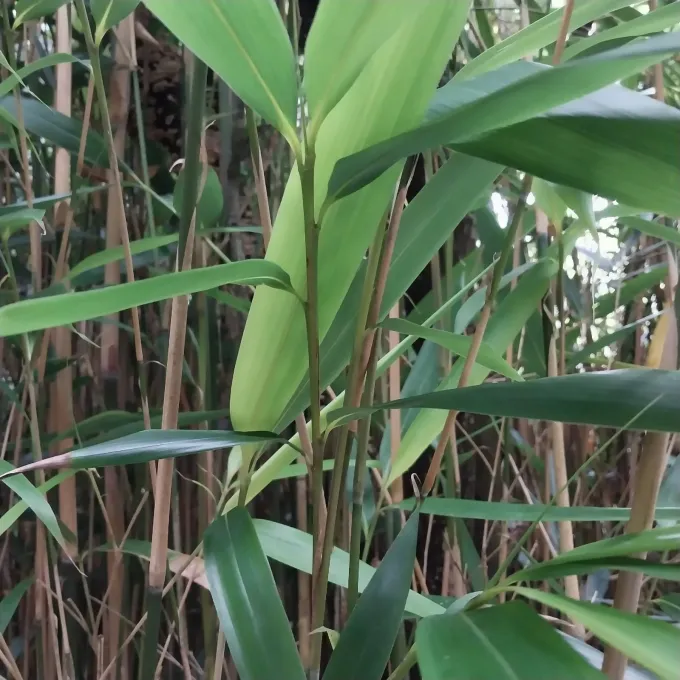
Description
Growing requirements
Pseudosasa japonica, commonly known as Arrow bamboo, is a robust evergreen perennial belonging to the Poaceae family. Originating from Japan and South Korea, it is widely appreciated in temperate climates for its architectural form and thick, lance-shaped leaves.
The plant thrives in fertile, moisture-retentive, yet well-draining soils. It adapts to various soil pH levels, although slightly acidic to neutral environments promote the best growth. Sufficient soil aeration is crucial for the development of its spreading rhizomes.
It is noted for its relative cold hardiness compared to other bamboo species, tolerating temperatures down to -15°C or even lower with proper protection. In areas with harsh winters, a thick layer of mulch helps insulate the root system from deep freezing.
Pseudosasa japonica prefers partial shade to full sun locations. While it is tolerant of wind, placing it in a sheltered spot prevents leaf desiccation and keeps the foliage looking lush and dark green throughout the year.
Regular maintenance includes watering during dry spells and applying nitrogen-rich fertilizers in early spring. Due to its vigorous growth habit, using a root barrier is highly recommended when planting in residential gardens to keep the clump under control.
Main diseases and pests
Common pests include spider mites and aphids, which are particularly active in dry, warm conditions. Monitoring the underside of the leaves is a good practice to prevent significant infestations during the growing season.
Fungal diseases, such as leaf spot or root rot, may occur if the soil is kept too waterlogged or if there is poor air circulation around the culms. Proper site selection and avoiding overhead irrigation can significantly mitigate these risks.
Harvesting
In landscape design, this species is primarily used for creating privacy screens, hedges, and windbreaks. Its vertical growth pattern and year-round greenery make it a superior choice for urban landscaping and garden privacy.
Historically and traditionally, the straight and strong culms have been harvested for making arrows, gardening stakes, and various artisanal crafts. Today, it remains a valuable resource for both decorative and functional gardening tools.