
Psilurus incurvus
Psilurus incurvus
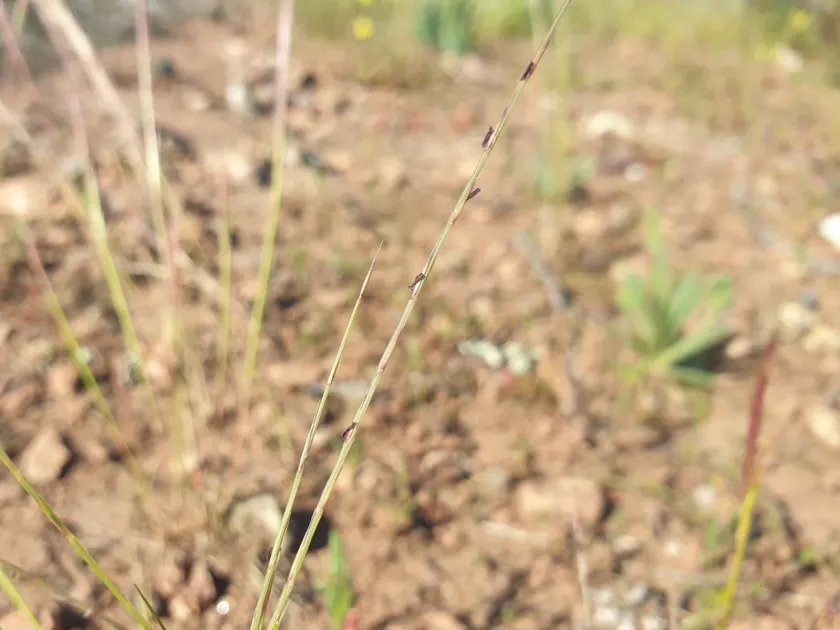
Description
Sowing dates
Psilurus incurvus is an annual grass species that propagates primarily through seeds. The life cycle typically begins during the cooler periods of the year, usually in autumn or early spring, depending on the geographical location.
Successful sowing requires soil temperatures to reach approximately 8–10 degrees Celsius. Adequate moisture in the seedbed is critical to ensuring uniform germination across the field.
Seeds should be sown at a shallow depth of 2–3 centimeters due to their small size. Proper seed-to-soil contact is essential to facilitate moisture uptake and rapid emergence of the seedlings.
In agricultural practice, standard seeding rates for small-seeded grasses are generally recommended. The plant exhibits a strong tendency for self-seeding, which helps maintain the stand density in pasture environments.
Early sowing dates are advantageous as they allow the crop to capitalize on spring moisture, supporting robust root development and vegetative growth before the onset of summer drought.
Growing requirements
As a member of the Poaceae family, Psilurus incurvus prefers open, well-lit environments. It does not perform well under the shade of competitive taller vegetation or trees.
This grass is highly adapted to arid and semi-arid climates, demonstrating significant drought tolerance. It thrives in regions where water availability is a limiting factor for more sensitive species.
The plant is not overly demanding regarding soil fertility and can successfully establish itself on sandy, rocky, or nutrient-poor soils. It also shows a notable tolerance to saline soil conditions.
Good drainage is vital for its growth, as the plant is sensitive to waterlogged conditions. Excessive standing water can cause root damage and increase susceptibility to decay.
Management requires minimal soil disturbance once established. Maintaining a balanced plant density is key to optimizing its competitiveness against invasive weeds during the early vegetative stage.
Yield
The productive value of Psilurus incurvus peaks during the early spring, when it provides a valuable source of green biomass. This early-season growth is crucial for supplementing animal feed needs.
Yield potential depends heavily on stand density and the specific precipitation patterns of the growing season. In favorable conditions, it provides a consistent, albeit modest, yield of high-quality forage.
Including this grass in pasture mixes can improve the overall carrying capacity of the land. Livestock, particularly small ruminants, readily consume the foliage while it remains in a succulent, vegetative state.
For hay production, harvesting should be performed before the onset of the full flowering phase. Harvesting at the correct physiological stage ensures maximum protein content and digestibility.
With proper rotational grazing management, the species can contribute to long-term forage stability, supporting efficient livestock production systems throughout its active growth window.
Main diseases and pests
The crop is susceptible to common fungal diseases, including rusts and powdery mildew, which are particularly prevalent during periods of high humidity or poor field ventilation.
Pests such as cereal flies and various aphid species can damage young stems and leaves. Early detection and monitoring are essential to prevent significant losses in vegetative mass.
Competition from aggressive weeds can pose a threat during the initial seedling establishment phase. Field management should focus on maintaining a competitive edge through proper timing of operations.
Overgrazing poses a significant risk to the plant's ability to regenerate and set seeds for the following season. Implementing controlled grazing cycles is necessary for the long-term sustainability of the stand.
Proactive monitoring and the application of integrated pest management practices help minimize these threats and ensure the health of the forage crop throughout the season.
Harvesting
The optimal harvest window is during the late vegetative or early heading phase. At this stage, the nutritional profile of the grass is at its peak, providing the best quality for livestock consumption.
Mechanized harvesting requires careful adjustment of cutting height to avoid damaging the crown of the plant. Preserving the crown is essential to allow for potential regrowth or seed distribution.
Once mowed, the biomass should be dried uniformly to produce hay. Preventing moisture accumulation during the drying process is critical to avoiding mold, which can degrade the nutritional value and safety of the feed.
Harvesting strategies can be optimized by using equipment that handles small-seeded hay efficiently. Proper timing helps reduce manual labor and increases the overall productivity of the harvest cycle.
Proper storage in a dry, ventilated environment ensures that the hay retains its feed quality for winter use, providing a reliable resource for supplemental livestock nutrition.