
Puccinellia dolicholepis
Puccinellia dolicholepis
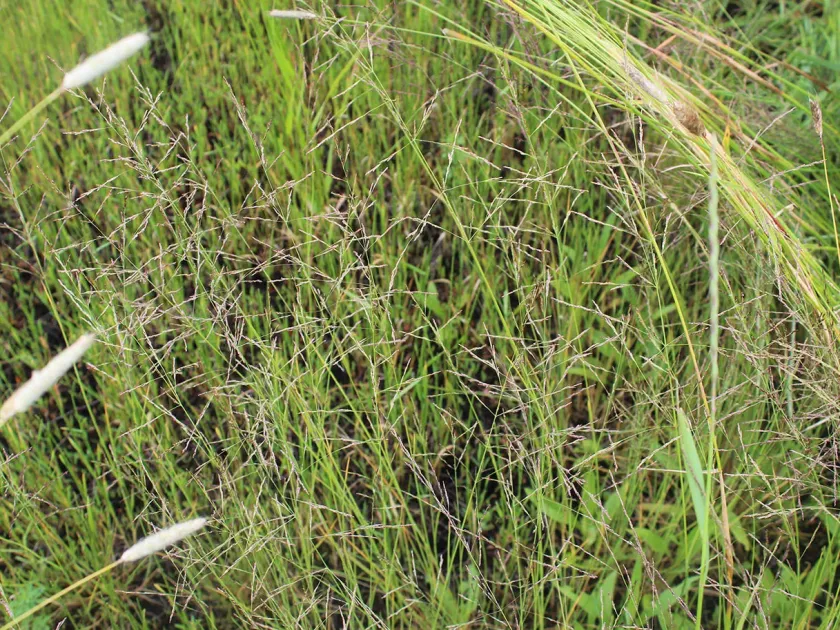
Description
Sowing dates
Puccinellia dolicholepis is a perennial grass that is best sown in early spring when soil moisture is optimal for germination. The seeds are small, requiring a shallow planting depth to ensure they remain in the moisture-rich layer of the soil.
The recommended seeding rate is typically between 8 to 12 kg per hectare, depending on soil conditions and the intended use of the site. Uniform spreading is crucial for establishing a healthy and dense stand of grass.
Rolling the soil after sowing is a standard agricultural practice that improves the contact between the seed and the soil, significantly boosting germination rates in challenging environments.
During the first year, growth is slow as the plants establish their deep root systems. Providing adequate weed control during this phase is essential for the long-term success of the stand.
Natural reseeding is a characteristic of this grass, which helps maintain the stand density over time without the need for frequent over-seeding, making it a cost-effective choice for large areas.
Growing requirements
This grass is a specialized halophyte, meaning it is biologically adapted to thrive in soils with high salt concentrations. It is a vital tool for reclaiming salt-affected lands where standard crops would fail.
It displays remarkable climatic resilience, surviving both harsh winter temperatures and the intense heat of summer. This adaptability makes it suitable for diverse geographical regions, including arid and semi-arid zones.
Water requirements are moderate, though the plant is notably tolerant of temporary waterlogging. It is frequently utilized in low-lying areas with high mineralized groundwater levels.
Puccinellia dolicholepis adapts well to various soil textures, including clay, loam, and sandy soils. Its ability to extract nutrients in saline conditions is unmatched by many other forage grasses.
The deep root system not only supports the plant but also improves soil structure over time, which aids in reducing erosion and improving the long-term viability of the field.
Yield
The forage yield is impressive given the challenging conditions it grows in, typically ranging from 5 to 15 tons of green biomass per hectare. It provides consistent nutrition for livestock grazing in harsh environments.
Nutritionally, the grass is high in protein and essential minerals when harvested at the right stage. Livestock readily consume it both as fresh forage on the pasture and as cured hay.
Seed yield management requires careful timing, as the mature seeds can disperse easily. Harvesting should be performed before the seeds fully drop to maximize the seed bank recovery.
Rotational grazing systems are recommended to maintain the productivity of the stand. Overgrazing should be strictly avoided to allow the root systems to replenish their energy reserves.
Nitrogen fertilization in early spring can boost vegetative growth, although caution must be used to ensure that the ecological balance of the saline-tolerant stand is not disturbed by excessive inputs.
Main diseases and pests
Puccinellia dolicholepis is highly resistant to common agricultural pests and diseases. Its evolution in harsh saline conditions has fostered a strong immune system against standard pathogenic fungi.
In extremely humid weather, minor cases of fungal infections may occur, but they rarely impact the biomass yield significantly. Chemical intervention is almost never required for this hardy species.
Insect pests typically find the plant less attractive than softer grasses. Even if minor damage occurs, the rapid regenerative capacity of the plant ensures that the stand recovers quickly.
Weed encroachment is the primary threat during the establishment phase. Proper site preparation and early-stage weeding are the best defense mechanisms for this grass.
Soil compaction caused by heavy equipment or extreme overgrazing represents the greatest risk to the health of the root system, which can lead to reduced vigour in older stands.
Harvesting
Harvesting for hay should ideally occur at the onset of flowering or heading. This ensures the grass is at its peak nutritional value before the stems become fibrous and lose quality.
Maintaining a stubble height of at least 5-7 cm is critical. This practice prevents the soil from overheating and protects the crown of the plant, which is vital for quick regrowth after cutting.
Field drying is usually sufficient due to the plant's growth habits. Hay should be stored in dry, well-ventilated areas to prevent microbial spoilage and to maintain its high feed quality.
For seed collection, a two-stage harvesting method is often used to minimize losses. Cutting and drying in swaths is effective for ensuring the seeds reach the proper moisture levels for storage.
Standard farm machinery is perfectly suitable for harvest operations, provided that equipment is cleaned and maintained to withstand the potentially corrosive nature of salts found in the field environment.