
African rice
Oryza glaberrima Steud.
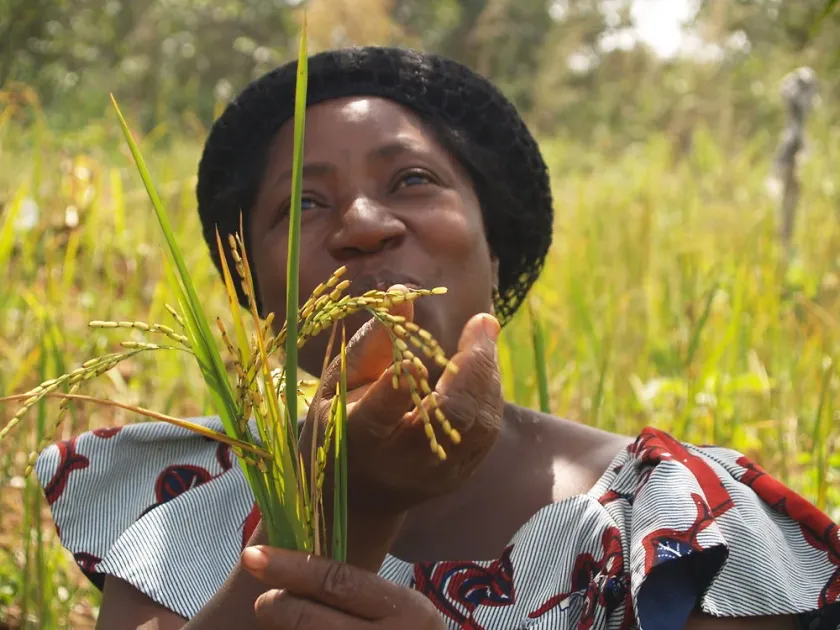
Description
Sowing dates
Oryza glaberrima, commonly known as African rice, belongs to the Poaceae family. It was domesticated in the Niger River delta thousands of years ago, becoming a vital food source for local populations.
Sowing occurs at the beginning of the rainy season, typically in early June. Farmers prepare the seedbed to ensure soil moisture is sufficient to support rapid germination of the grains.
Seeds are usually sown in rows to facilitate weed management, with row spacing optimized to balance plant density and airflow, which is critical for reducing fungal pathogen pressure.
The crop displays exceptional initial vigor, allowing it to establish itself quickly and suppress weed growth, which is a major advantage in low-input farming systems in West Africa.
Due to the short dormancy period of the grains, careful storage practices must be employed to prevent premature germination when the seeds are exposed to humid environments.
Growing requirements
This species is highly valued for its remarkable tolerance to various abiotic stresses. It demonstrates superior resistance to iron toxicity, salinity, and water fluctuations compared to Asian varieties.
African rice thrives in diverse soil types, ranging from alluvial soils to nutrient-poor, degraded lands. Its deep root system allows it to extract moisture and nutrients where other crops would fail.
Optimal growth temperatures for this species are between 25°C and 30°C. While the plant is drought-tolerant, it requires sufficient water during the critical stages of flowering and grain filling.
High levels of solar radiation are required for maximum photosynthesis. Exposure to direct sunlight is essential for the development of large, productive panicles and uniform grain filling.
The plant is photoperiod-sensitive, meaning that flowering and maturity times can vary depending on the latitude and the length of the growing season in specific regions.
Yield
Yield potential of Oryza glaberrima typically ranges from 1 to 2.5 tons per hectare. While lower than high-yielding modern hybrids, its reliability in harsh conditions is unmatched.
Grain shattering is the primary factor limiting yields. Because seeds drop easily upon maturity, timely harvesting is required to prevent significant harvest losses in the field.
Productivity can be significantly improved through the use of organic amendments and better water management practices, which enhance the overall health and vigor of the rice stand.
Ongoing agricultural research focuses on crossing African rice with Asian rice (Oryza sativa) to combine the high-yielding traits of the latter with the environmental hardiness of the former.
Modern agronomic approaches emphasize the preservation of local landraces, which are well-adapted to specific ecological niches and require fewer synthetic inputs for sustained production.
Main diseases and pests
Nematodes are among the most serious pests for this crop, often damaging the root system and limiting nutrient uptake, which results in stunted plant growth and lower grain quality.
Fungal diseases, such as rice blast (Pyricularia oryzae), represent a constant threat during periods of high humidity, causing lesions on leaves and potentially destroying the entire panicle.
Parasitic weeds like Striga (witchweed) can devastate rice fields by attaching to the roots and siphoning water and essential nutrients from the rice plants throughout the growing cycle.
Stem borers and various leaf-feeding insects can cause significant damage to the plant's vegetative parts, often leading to lodging and reduced grain production in the final harvest.
Effective pest control involves integrated management strategies, including the use of resistant varieties, proper crop rotation schedules, and the maintenance of soil health through organic practices.