
Red rice
Oryza rufipogon Griff.
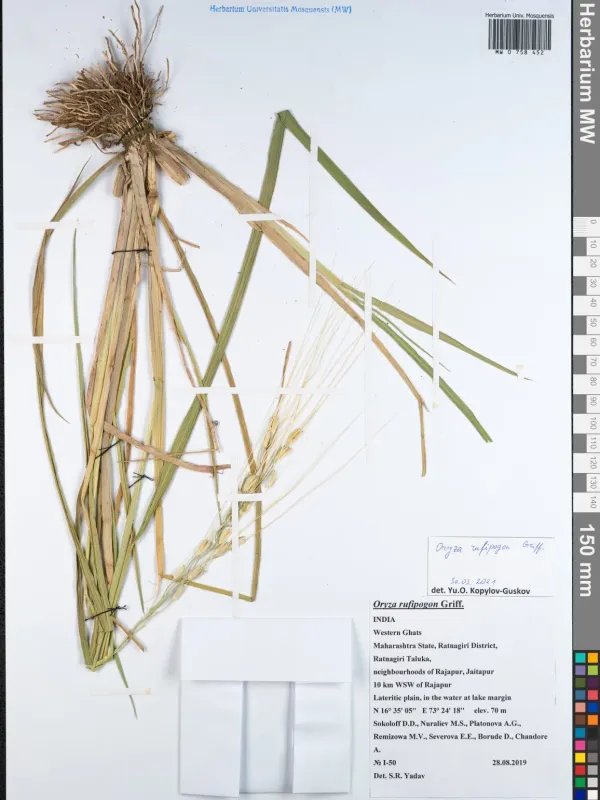
Description
Growing requirements
Oryza rufipogon, known as red rice or perennial wild rice, belongs to the Poaceae family. It is recognized as the immediate wild ancestor of domesticated Asian rice and is highly valued for its robust genetic diversity.
The species is indigenous to the tropical regions of South and Southeast Asia. It thrives in wetlands, marshes, and river floodplains where water levels are stable, requiring a tropical climate with high temperatures throughout the growing season.
Soil requirements focus on heavy, fertile silty clay soils that can maintain a saturated state. Proper water management is the cornerstone of its agronomy, as the plant is specifically adapted to aquatic or semi-aquatic environments.
Cultural practices involve precise water depth regulation, which helps in suppressing weeds and providing the necessary anaerobic environment for root development. The plant demonstrates high vigor and a natural ability to outcompete native aquatic vegetation.
Economically, this crop serves as a vital source of genetic resistance traits for breeding programs. Additionally, the grains are marketed as a specialty food product due to their high nutritional content, specifically antioxidants like anthocyanins.
Main diseases and pests
Blast disease (Pyricularia oryzae) represents the most significant pathological threat to red rice. It spreads rapidly in humid environments, necessitating the use of disease-resistant varieties and controlled irrigation cycles.
Pest pressure from stem borers and rice weevils requires diligent monitoring throughout the vegetative and reproductive phases. Integrated Pest Management (IPM) strategies are recommended to reduce chemical reliance.
Soil-borne nematodes can lead to reduced nutrient uptake and stunted growth, negatively impacting the overall yield. Proper crop rotation and soil preparation are essential preventative measures against these pathogens.
Aquatic weeds pose a competitive challenge during the early stages of growth, potentially reducing the stand density. The management of water levels is often utilized as an ecological method to control non-aquatic weed species.
Abiotic stress factors such as water salinity or thermal fluctuations during the flowering stage can lead to significant yield losses. Maintaining optimal water levels helps stabilize the microclimate within the field canopy.