
Muhlenbergia racemosa
Muhlenbergia racemosa
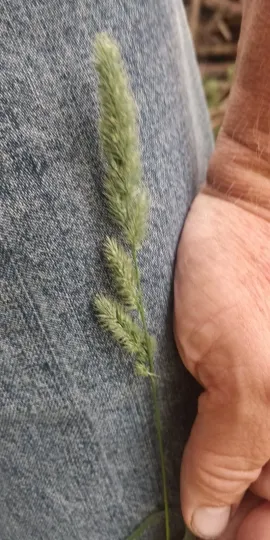
Description
Sowing dates
Muhlenbergia racemosa, commonly known as marsh muhly, is a perennial grass belonging to the Poaceae family. It is primarily propagated by seeds which mature in late summer.
Sowing should ideally occur in early spring or late autumn, providing the seeds with a period of cold stratification that is often necessary for breaking dormancy and ensuring uniform germination.
Seeds should be sown shallowly, as they are very small and require light for optimal germination; a soil covering of no more than 0.5 to 1 cm is recommended.
The ideal germination temperature ranges between 15°C and 22°C. Maintaining consistent soil moisture during the first few weeks after sowing is critical for successful stand establishment.
Once established, the grass forms dense, rhizomatous mats that help it spread and stabilize the soil, making it a reliable plant for long-term land cover projects.
Growing requirements
This species is native to North America and is typically found in moist environments, including prairies, meadows, riverbanks, and limestone outcrops, showing wide adaptability.
It prefers full sun to partial shade. While it thrives in moist soils, it exhibits significant drought tolerance once established due to its extensive and deep root system.
The plant is highly tolerant of varying soil types, ranging from sandy to clay-loam, and performs well in soils with a neutral to slightly alkaline pH level.
Muhlenbergia racemosa is extremely cold-hardy and can withstand harsh winter conditions, making it suitable for temperate regions where other grasses might suffer from winterkill.
Minimal fertilization is required; however, nitrogen application in the early spring can significantly increase biomass production if the grass is grown for forage purposes.
Yield
The primary use of Muhlenbergia racemosa includes erosion control, habitat restoration, and inclusion in native grass mixtures for land reclamation and pasture improvement.
As a forage crop, it provides nutritious grazing during its active growth period, although it should be managed to prevent overgrazing which can damage the rhizomatous roots.
Yield potential is dependent on moisture availability; under optimal conditions, the grass produces substantial biomass that can be harvested as hay.
In conservation projects, the yield of seeds is often sought for re-seeding native prairie areas, which helps in maintaining biodiversity in reclaimed landscapes.
The dense foliage of this species makes it an effective ground cover, reducing the need for mechanical weed control in large-scale agricultural or restoration settings.
Main diseases and pests
Marsh muhly is generally resistant to most pests and diseases common to agricultural grasses, largely because it is a native species adapted to its environment.
Potential threats include rust diseases that may occur during periods of high humidity and poor air circulation, which can cause leaf yellowing and reduced vigor.
Insects like aphids or leaf-feeding caterpillars may occasionally infest the plants, but they rarely reach economic threshold levels requiring chemical intervention.
Proper management, including avoiding over-watering and ensuring adequate space between plants, is usually sufficient to mitigate most disease risks.
Weed competition can be a factor during the seedling stage; therefore, keeping the area clear of fast-growing weeds until the grass is established is recommended.
Harvesting
Harvesting for hay should be timed before the plants reach full maturity and the stems become too fibrous and woody, ensuring the highest nutrient quality.
Seed harvesting is best performed when the seed heads turn a golden-brown color, which indicates maturity before the seeds naturally shatter and disperse.
After mechanical harvesting, the biomass should be dried properly in windrows to prevent mold formation and to preserve the overall quality of the harvested hay.
When harvesting for conservation purposes, techniques that involve gentle handling are preferred to ensure the seeds are not damaged during the threshing process.
Post-harvest management often involves light harrowing to incorporate remaining organic matter into the soil, supporting the nutrient cycle for the next growing season.