
False buffalograss
Munroa squarrosa
Description
Growing requirements
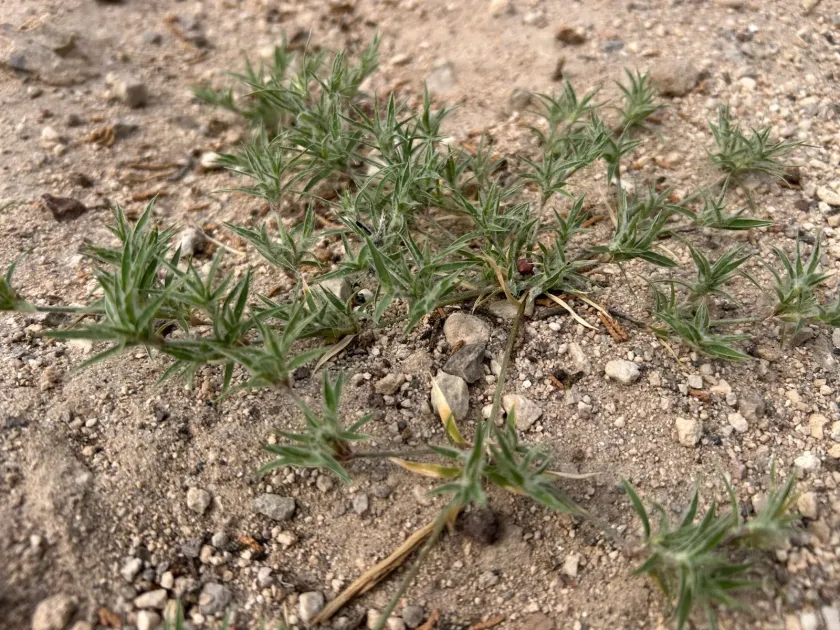
Munroa squarrosa, commonly known as false buffalograss, is an annual grass species belonging to the Poaceae family. This plant exhibits a low-growing, mat-forming habit, which allows it to thrive in arid environments by conserving soil moisture and providing ground cover.
Originating from the North American Great Plains, this species is highly adapted to semi-arid climates. It is frequently found in open, disturbed sites where other vegetation struggles to establish due to severe drought and poor soil quality.
The plant thrives in sandy or gravelly soil types that offer excellent drainage. It is not tolerant of waterlogged conditions and prefers neutral to alkaline pH levels typical of arid desert-like environments, making it a specialized choice for land restoration.
Growth is primarily driven by seasonal rainfall patterns. Munroa squarrosa requires intense solar radiation to reach full physiological maturity and does not tolerate competition from taller, invasive weed species in the same area.
In terms of хозяйственное usage, false buffalograss is primarily utilized as a forage component in range management. Its ability to colonize eroded landscapes makes it an essential tool for soil conservation and stabilization in delicate grassland ecosystems.
Main diseases and pests
The most significant threats to Munroa squarrosa include fungal diseases such as rusts and smuts, which often emerge during periods of uncharacteristic humidity. These pathogens can weaken the plant's structural integrity and significantly reduce biomass production.
Insect pressure is a constant concern, with grasshoppers being the primary herbivore. In years of high insect populations, these pests can completely denude the patches of false buffalograss, affecting the recovery of the local pastureland.
Root-feeding larvae, such as white grubs, can cause localized plant death, particularly in sandy soils where these pests frequently aggregate. Monitoring soil health is crucial for preventing significant infestations of these underground threats.
Overgrazing poses a structural threat to the persistence of Munroa squarrosa. If the plant is continuously grazed without recovery time, the soil becomes exposed, leading to increased erosion and a subsequent reduction in the seed bank.
Integrated pest management strategies are generally limited to natural control methods, given the ecological context of the grasslands where this species is typically found and managed.