
Muhlenbergia paniculata
Muhlenbergia paniculata
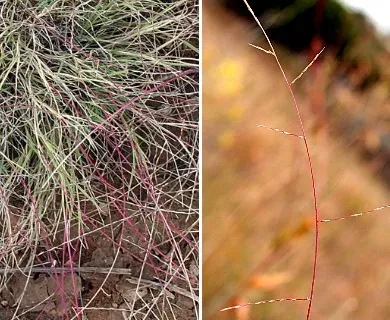
Description
Growing requirements
Muhlenbergia paniculata is a perennial grass species belonging to the Poaceae family. Originally native to North America, this plant is well-adapted to arid and semi-arid environments, thriving in open spaces where it can fully develop its fibrous root system.
Botanically, it is characterized by fine-textured foliage and airy, panicle-shaped inflorescences that appear in late summer. This species is highly valued for its structural aesthetic and its ability to withstand extreme environmental conditions including heat and prolonged drought periods.
Regarding climate and soil requirements, the culture performs best in full sun exposure. It demands well-draining soil, ideally sandy or rocky substrates, as it is highly intolerant of waterlogged conditions, particularly during the winter dormancy period which can lead to crown rot.
Agronomic practices focus on minimal intervention once established. Spring maintenance involves cutting back the dried foliage to promote new growth. It does not require intensive fertilization, as the plant is naturally adapted to nutrient-poor soils found in its native habitats.
The primary horticultural application of Muhlenbergia paniculata is in landscape design, specifically for xeriscaping and sustainable planting schemes. Its graceful appearance makes it an excellent choice for ornamental borders and for stabilizing embankments due to its extensive root structure.
Main diseases and pests
This grass species is notably resilient and generally free from serious diseases when planted in appropriate environments. The most significant threat is improper drainage, which promotes soil-borne pathogens and root rot, significantly weakening the plant's structural integrity.
Pest issues are minimal, though plants under severe drought stress may become susceptible to infestations of aphids or spider mites. Integrated pest management strategies, focusing on optimal irrigation and proper spacing for air circulation, effectively mitigate these risks for the crop.