
Microstegium nudum
Microstegium nudum
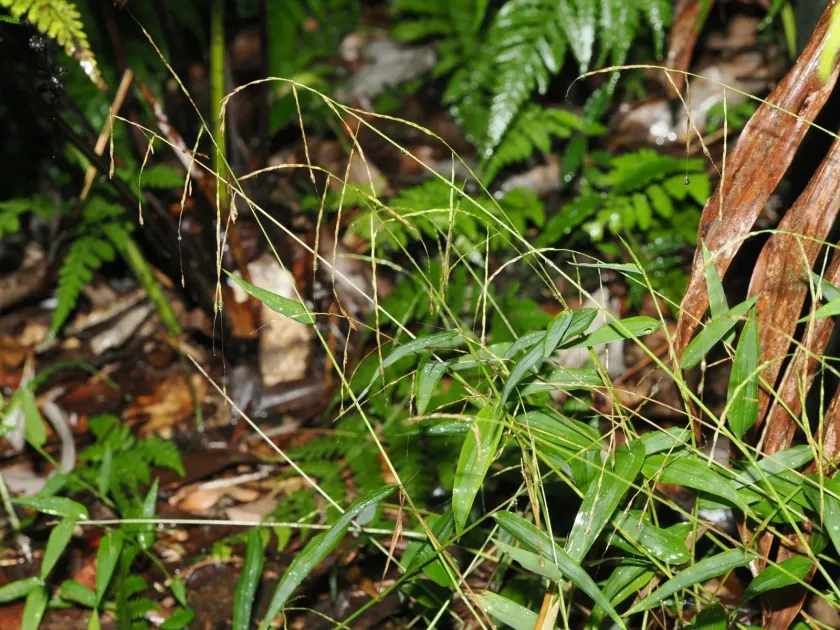
Description
Sowing dates
Microstegium nudum is an annual grass species that completes its lifecycle within a single growing season. For optimal development, seeds should be sown in the spring once the soil temperature is consistently conducive to germination and early root establishment.
The seeds require a moist, well-prepared seedbed to achieve high emergence rates. Since the seeds are relatively small, shallow placement is necessary to ensure they receive the light exposure required for successful sprouting and early growth.
Both row and broadcast seeding methods are applicable depending on the intended use of the crop. Rapid early growth is a key characteristic of this species, allowing it to quickly establish ground cover and suppress competitive vegetation in the vicinity.
Calculating the correct seeding rate is essential for achieving the desired stand density. Proper spacing ensures that individual plants have sufficient access to moisture and nutrients, preventing the competition that often occurs in overcrowded seedbeds.
Post-seeding management typically involves light rolling to improve soil-to-seed contact. This practice is crucial in preventing seed desiccation, especially in fields where moisture levels fluctuate frequently during the critical early growth stage.
Growing requirements
Belonging to the Poaceae family, Microstegium nudum thrives in moist environments. It is frequently observed growing along stream banks, river floodplains, and in shaded woodland areas, highlighting its natural preference for high-humidity habitats.
A notable botanical feature of this species is its high shade tolerance. Unlike many other grass species that require full sun exposure, this crop can be effectively cultivated in environments with filtered light or partial shade, making it highly versatile.
The soil should be fertile, well-draining, yet capable of retaining moisture. While it adapts to a range of soil types, loams rich in organic matter provide the best results for biomass production, provided the pH remains near neutral.
Temperature management is important, as the plant prefers moderate conditions. Extreme heat combined with prolonged drought can cause wilting and reduced metabolic activity, necessitating supplemental irrigation in regions prone to dry spells.
Cultivation practices should emphasize maintaining a balance between soil aeration and moisture. Strategic application of nitrogen-based fertilizers early in the season can significantly enhance vegetative growth, though care should be taken to avoid excessive nitrogen levels that could lead to weak, prone stems.
Main diseases and pests
Fungal diseases are among the primary threats, particularly in high-humidity conditions where airflow is restricted. Conditions such as powdery mildew can affect foliage quality, requiring thinning of the stand to improve air circulation and reduce disease pressure.
Pests, including various aphids and cereal leaf beetles, can pose a challenge to the crop's health. These insects feed on the plant's sap and leaf tissue, which can stress the plant and increase its vulnerability to secondary infections.
Root rot pathogens become a significant concern in areas with poor drainage or chronic waterlogging. Managing soil hydrology and ensuring adequate field drainage is essential to protect the root system and ensure the overall vigor of the crop.
Weed management is critical during the establishment phase, as young seedlings can be easily outcompeted for resources. Integrating mechanical cultivation or selective herbicide applications ensures the crop maintains its competitive advantage.
Adverse weather events, such as intense rainfall or strong winds, can result in lodging. Implementing agronomic practices that encourage sturdy stem development and using shelterbelts can help mitigate the physical damage caused by unpredictable environmental conditions.