
Japanese stiltgrass
Microstegium vimineum
Description
Growing requirements
Japanese stiltgrass (Microstegium vimineum) is an annual grass species belonging to the Poaceae family. While not a cultivated crop in modern agriculture, it is widely recognized by agronomists as a highly invasive weed that poses significant challenges to land management and biodiversity.
The species is native to East and South Asia. Over the decades, it has established a significant range in North America, invading forests, wetlands, and agricultural borders. Its ability to colonize disturbed areas makes it a common sight in roadside ditches and unmanaged field margins.
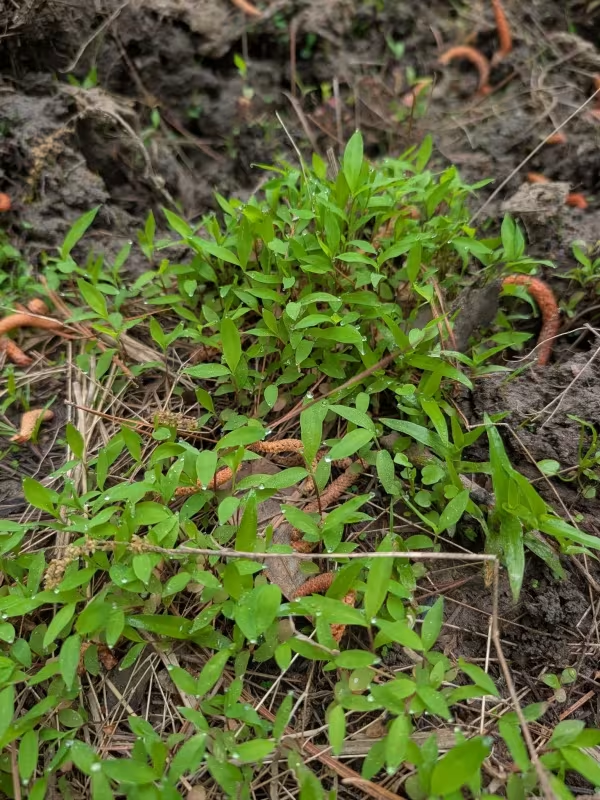
Botanically, this grass is characterized by its delicate, sprawling stems that can reach heights of up to 1 meter. The leaves are distinctively lance-shaped with a silvery midvein, which serves as a key identification feature. The root system is fibrous and shallow, allowing for rapid nutrient uptake in moist soils.
Regarding environmental requirements, the plant favors moist, nutrient-rich soils. It exhibits remarkable ecological plasticity, thriving in a wide range of light conditions from full sun to deep shade. This versatility allows it to outcompete native vegetation in diverse habitats effectively.
Agrotechnical management relies heavily on prevention and mechanical control. Since the plant reproduces primarily through seeds, the most effective strategy involves mowing or pulling the weeds before they reach the flowering stage. Early intervention is crucial to deplete the soil seed bank over time.
Main diseases and pests
The primary threat posed by Japanese stiltgrass is its potential to dominate understory vegetation and agricultural edges, outcompeting native and cultivated crops for light, water, and soil nutrients. Once established, its dense growth creates a monoculture that is difficult to eradicate.
While the plant shows strong resilience, it can be susceptible to common grass pathogens such as rust fungi. Furthermore, it may serve as an alternative host for various pests and diseases that affect commercial grass crops, thus necessitating vigilant phytosanitary monitoring on agricultural borders.