
Microstegium ciliatum
Microstegium ciliatum
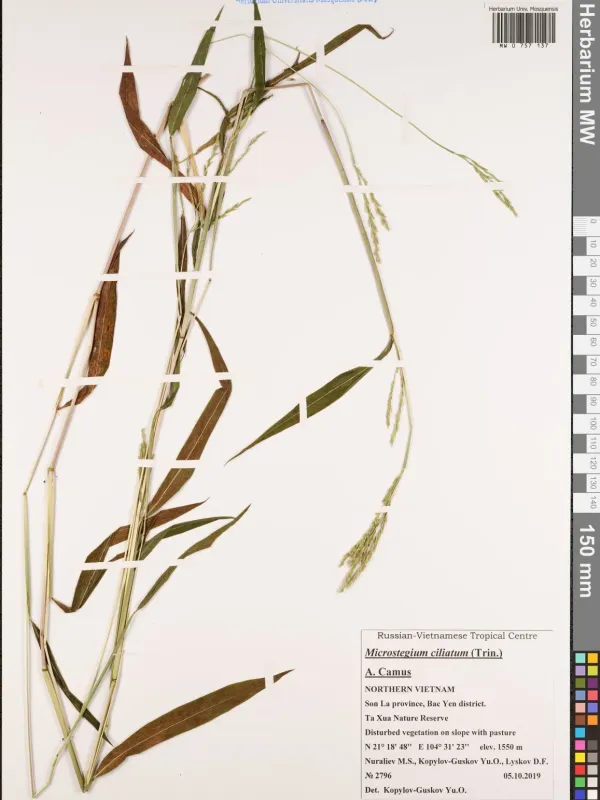
Description
Sowing dates
Microstegium ciliatum is a grass species belonging to the Poaceae family, known for its adaptability to moist environments.
Sowing should be carried out in the spring once soil temperatures are sufficient to support seed germination and root establishment.
Seeds require shallow planting in a well-prepared seedbed to ensure proper contact with moisture while avoiding excessive depth.
Rapid germination is achievable under stable moisture conditions, allowing the crop to establish a robust root system quickly.
Strategic planting density is essential for maximizing biomass production when the crop is utilized as a cover or forage component.
Growing requirements
The plant thrives in regions with temperate to warm climates, showing a clear preference for consistent water availability throughout the growing season.
Ideal soils are fertile, well-draining loams that provide the necessary nutrients while preventing waterlogging, which the species dislikes.
Microstegium ciliatum demonstrates a remarkable tolerance for partial shade, making it a versatile option for various landscape positions.
The optimal pH range for this crop is slightly acidic to neutral, which ensures efficient nutrient uptake and overall plant vigor.
Protection from extreme temperature fluctuations is recommended during the early stages of growth to prevent developmental delays.
Main diseases and pests
Fungal diseases, particularly those triggered by high humidity and poor air circulation, represent a primary threat to crop health.
Common pests include aphids and mites, which can cause significant damage to foliage if infestation is not managed during dry spells.
Cultural control measures, such as maintaining proper spacing and ensuring adequate soil drainage, significantly reduce the incidence of rot.
Integrated pest management strategies should focus on biological controls to maintain the environmental sustainability of the field.
Regular monitoring of plant health allows for early detection of pathogens before they can spread throughout the entire cultivation area.
Harvesting
Harvesting for forage should occur during the vegetative stage, specifically at the boot stage, to maximize nutritional quality and protein content.
Mowing height is a critical factor for success; leaving sufficient stubble encourages rapid regrowth and improves the longevity of the stand.
Seed production harvesting is conducted when the spikes mature, taking care to minimize shattering losses during mechanical collection.
Post-harvest management involves prompt drying or ensiling to preserve the harvested biomass for animal feed applications.
Proper equipment calibration ensures that the harvest process is efficient while maintaining the integrity of the plant remnants for future growth.