
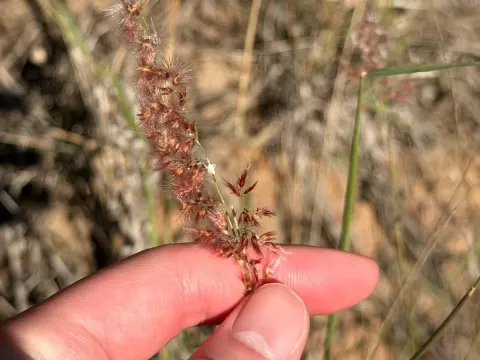
Melinis
Melinis
Melinis, specifically Melinis repens, is a warm-season grass that requires warm temperatures for germination. Sowing should take place in spring when soil temperatures consistently exceed +18°C.
What the section contains

Melinis
Due to the small size of the seeds, shallow sowing at a depth of 0.5–1 cm is essential. Proper soil compaction after sowing ensures better moisture transfer to the seeds.
Moisture availability during the first two weeks is critical for successful establishment. If the soil is too dry, irrigation is necessary to ensure uniform germination.
Melinis exhibits high germination vigor under optimal heat and moisture conditions. Seedlings usually emerge within 10 to 14 days, forming a thin but steady initial growth.
Seeding rates depend on the specific application, whether it is for dense pasture establishment or seed production. A higher density is generally preferred for grazing lands to suppress weeds.
Melinis belongs to the Poaceae family and is known for its remarkable adaptability to various soil types. It thrives in well-drained, sandy, or loamy soils with neutral to slightly acidic pH.
Originating from tropical Africa, Melinis has a high demand for sunlight and performs poorly in shaded environments. Adequate light is crucial for its high biomass production.
This grass is highly drought-tolerant, making it an excellent choice for degraded lands or areas with limited water resources where other crops fail.
Waterlogging and poor drainage must be avoided, as Melinis is prone to root rot in saturated soils. It prefers areas with good air circulation and moderate fertility levels.
The plant forms dense clumps that help stabilize soil structure and prevent erosion. Its deep root system allows it to compete effectively in diverse grass mixtures.
The yield of Melinis is influenced by the frequency of harvest and moisture levels. Under optimal nitrogen fertilization, the crop produces significant green matter.
Used as forage, Melinis is appreciated for its fast recovery after grazing or mowing. Young leaves are highly palatable and provide good nutritional value for livestock.
Timing the harvest for hay is essential. Mowing before the active flowering stage ensures higher protein content and prevents the stems from becoming too lignified.
In intensive farming systems, multiple cuts per season are possible, provided the plant is managed correctly. Its resilience makes it a reliable component in warm-climate forage production.
As part of mixed grass pastures, Melinis plays a role in sustaining the biomass yield throughout the growing season, acting as a productive filler crop.
Melinis is generally resilient, but it can be susceptible to fungal diseases such as powdery mildew, especially in areas with high humidity or poor airflow.
Soil-dwelling larvae can pose a risk to younger plants by damaging the root system. In extreme dry conditions, spider mites may sometimes attack the foliage.
Effective management includes regular monitoring and timely mowing to improve air circulation within the canopy, which significantly reduces the risk of fungal infections.
Biological and preventative measures are preferred over chemical interventions to maintain the safety of the forage. Crop rotation is an effective strategy to break pest life cycles.
The plant possesses natural phytosanitary properties, often suppressing specific soil pathogens, which adds extra value when including it in agricultural crop rotations.
Harvesting for green forage should occur during the booting stage to balance total biomass yield with the quality of the harvested feed.
When harvesting for seeds, the process should take place when the panicles show signs of mature coloring, indicating the seeds have reached physiological maturity.
Specialized equipment for small-seeded crops is required to minimize losses during the harvesting and threshing process. Proper storage conditions are essential for maintaining seed viability.
Grazing management should follow a rotational strategy to allow for the recovery of the plants. Avoiding overgrazing ensures the longevity of the Melinis stand.
Strategic harvesting helps sustain the perennial nature of the crop, providing several years of productive use without the need for immediate reseeding of the field.