
Leymus innovatus
Leymus innovatus
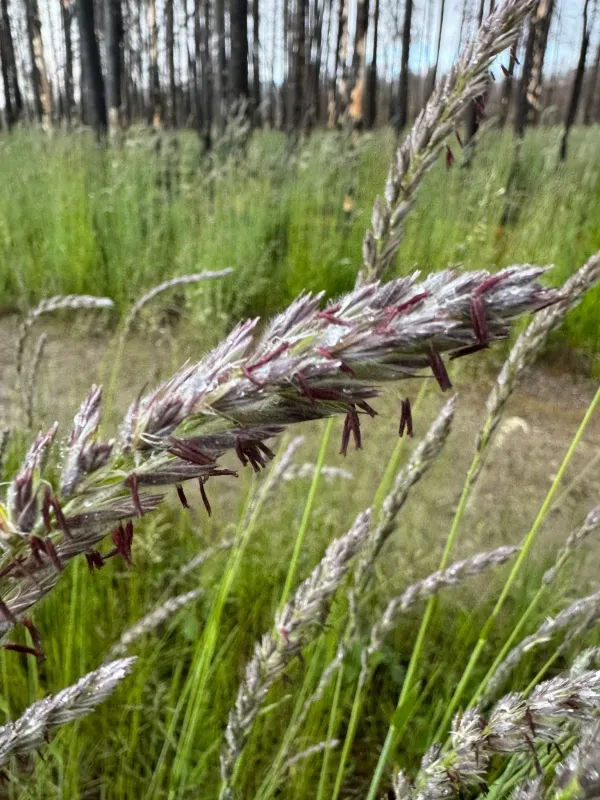
Description
Sowing dates
Sowing of Leymus innovatus is typically carried out in the spring, once soil temperatures reach 5-8 degrees Celsius. This timing ensures that the seeds benefit from the available spring moisture, which is essential for uniform germination in arid environments.
In regions with temperate climates, autumn or late winter sowing is an option to leverage natural stratification. This method encourages early development as soon as the weather warms, allowing the plants to establish a robust root system before the onset of summer heat.
Seeding rates depend on the specific field goals, whether for pasture or hay production. Standard row sowing with inter-row spacing of 15 to 20 cm is the preferred method to maintain adequate plant density and prevent excessive competition for nutrients.
Seeds should be planted at a depth of 3 to 5 cm, depending on soil texture. In lighter, sandy soils, slightly deeper planting is recommended to ensure the seeds remain in contact with consistent moisture levels as the surface layer dries out.
Post-sowing rolling is a critical step in the agrotechnical process to improve soil-to-seed contact. Proper establishment is vital, as the seedlings develop slowly during the first few weeks, necessitating diligent weed control to prevent suppression by invasive species.
Growing requirements
Leymus innovatus is a resilient member of the Poaceae family, specifically adapted to survive in harsh environmental conditions. Its primary strength lies in its exceptional cold hardiness, making it an ideal forage crop for regions with extreme winter temperatures.
The plant thrives in well-drained sandy or loamy soils and exhibits significant tolerance to soil salinity. Its deep and expansive root system enables it to access subterranean water sources, providing high drought resistance even during prolonged dry spells.
Leymus innovatus prefers open, sunny locations as it is highly photophilous. Shaded areas significantly reduce the biomass yield and lead to a thinner, less productive stand, which can eventually succumb to weed encroachment over several seasons.
While the species is hardy, it responds well to strategic nitrogen fertilization after the first harvest, which stimulates rapid vegetative regrowth. Avoiding waterlogged, heavy clay soils is crucial, as the root system can suffer from rot in low-lying areas.
The optimal pH range for this crop is between 6.5 and 8.5, making it suitable for a wide array of soil conditions. Its ability to stabilize soil makes it highly valuable for land reclamation, erosion control, and rehabilitating degraded pastoral landscapes.
Yield
The biomass yield of Leymus innovatus depends heavily on moisture availability throughout the growing season. In years with adequate rainfall, the crop is capable of producing significant quantities of hay, providing a reliable source of winter fodder for livestock.
Typically, one productive harvest is achieved in rain-fed conditions, although high-intensity management with irrigation can occasionally support two cuttings. The first cut usually yields the highest volume of high-quality forage when harvested during the head-emergence phase.
Seed production is a viable component of the cropping system, allowing farmers to maintain their own supplies. Properly managed seed fields are characterized by high uniformity and excellent seed longevity when stored in cool, dry conditions.
The nutritional profile of the grass is best preserved by harvesting before the culms become too fibrous. By cutting during the boot-to-heading stage, producers ensure a balance between yield quantity and protein content for efficient cattle consumption.
As a pasture plant, Leymus innovatus demonstrates great resilience to grazing pressure. Its ability to recover quickly from trampling and herbivory makes it a reliable component in long-term grazing rotations, even in areas where other grasses might fail.
Main diseases and pests
Leymus innovatus possesses an inherent resistance to many common fungal pathogens that typically afflict forage grasses. This natural immunity reduces the need for frequent chemical interventions, making it an excellent candidate for sustainable or low-input farming.
Insect pests, such as aphids and grass-inhabiting flies, may pose a risk during the early spring vegetative stages. Monitoring the fields for early signs of infestation and applying timely, selective insecticides effectively mitigates any potential damage to the stand.
Root rot is primarily a management-related issue occurring in poorly drained or waterlogged soils. Ensuring that the field has a natural slope or an adequate drainage system is the most effective preventative measure against these types of diseases.
In extremely dry seasons, spider mites can potentially inhabit the fields, stressing the plants. Managing surrounding weeds and keeping the stand vigorous through appropriate nutrient management helps the plants resist these minor infestations without extensive chemical use.
Care must be taken when using herbicides to ensure they do not harm the grass or the surrounding ecosystem. Selective treatment for broadleaf weeds is safe and recommended, provided that applications are made when the crop is not in its most sensitive growth phase.
Harvesting
Harvesting for hay should occur at the early heading stage to maximize nutritional value. Delaying the harvest leads to lignification of the stems, which decreases palatability and digestibility for the animals consuming the winter feed.
Seed harvesting is conducted once the seeds have reached physiological maturity and the heads have turned a straw color. Timing is critical because the seeds can shatter easily; operators should use equipment settings calibrated for small grains to minimize loss.
Properly dried hay maintains its structural integrity and resists mold, even when stored in piles for a short duration in the field. Using modern mowers and conditioners helps speed up the drying process by creating uniform swaths for rapid moisture loss.
Storage facilities should prioritize ventilation to prevent moisture accumulation within the bales or piles. Keeping the hay dry is essential for preventing quality loss and ensuring that the nutritional content remains high until the material is needed for livestock.
Total moisture content of the stored material should be monitored to stay below 17 percent. Following these best practices for harvesting and storage guarantees that Leymus innovatus remains a high-quality forage resource throughout the entire winter season.