
Creeping wildrye
Leymus triticoides
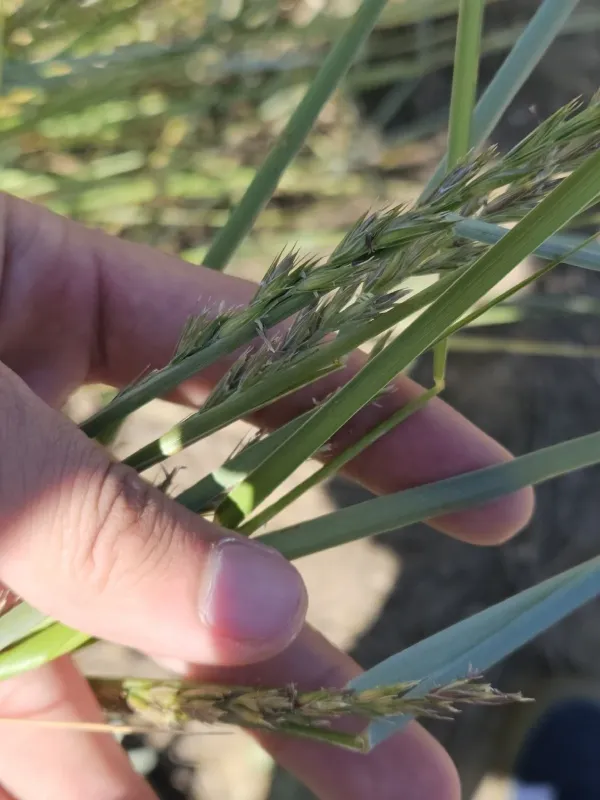
Description
Sowing dates
Sowing of creeping wildrye (Leymus triticoides) is best performed during the autumn or early spring when soil conditions are suitable for field operations. The timing depends heavily on the specific climatic zone, aiming for periods with adequate soil moisture.
For optimal establishment, seeds should be sown at a depth of 2 to 4 centimeters into well-prepared, loose soil. Maintaining precise planting depth is critical to prevent the desiccation of young seedlings during the initial weeks of development.
Seeding rates vary depending on the intended use; higher densities are employed for pasture development, while sparser sowing is acceptable for phytoremediation and erosion control projects. Ensuring good seed-to-soil contact is vital for uniform emergence.
Initial germination is relatively slow, necessitating weed control during the early stages of vegetation. Agronomists recommend planting in weed-free fallow fields to minimize competition during the first year of the crop's establishment.
Post-sowing field compaction is recommended to enhance capillary water movement toward the seeds, ensuring consistent germination even during periods of minor water deficit in the spring.
Growing requirements
Creeping wildrye is a perennial, rhizomatous grass belonging to the Poaceae family. It is highly adapted to the conditions of steppe regions and semi-deserts, exhibiting outstanding drought tolerance and resilience in harsh environments.
The crop prefers deep, well-aerated soils but is remarkably tolerant of high salinity levels. This versatility makes it an excellent candidate for reclaiming degraded or mineralized lands that are unsuitable for traditional cereal cultivation.
The plant requires full sun and does not tolerate shading. Maximum biomass productivity is achieved when the crop is situated in open areas with unimpeded access to solar radiation throughout the entire growing season.
Climatic requirements include a moderate demand for warmth. Creeping wildrye possesses high cold tolerance, allowing it to successfully survive winter conditions even in regions characterized by severe temperature minima.
The plant's root system is highly branched, which plays a significant role in soil stabilization. Consequently, it is effectively used in conservation agriculture to combat erosion and improve the structural integrity of topsoil in arid regions.
Yield
The biomass yield of Leymus triticoides is directly influenced by moisture availability and nitrogen nutrition. Despite its inherent hardiness, moderate fertilizer application can support multiple harvests within a single growing season.
Under natural conditions, productivity may be modest, but in managed pasture systems with appropriate rotational grazing, it can achieve yields that justify the agricultural investment.
Hay quality is generally moderate, though it possesses high energy density. Harvesting during the booting stage provides an optimal balance of nutrients, making it a valuable feed source for livestock.
To maintain high productivity over many years, it is crucial to avoid overgrazing. Excessive grazing pressure depletes the plant's rhizome reserves, leading to stand thinning and reduced yields in subsequent seasons.
- Enhanced drought tolerance provides harvest stability.
- Ability to thrive on saline soils increases overall land-use efficiency.
- Good regrowth potential after mowing allows for multiple harvests per year.
Main diseases and pests
The primary biological threats to creeping wildrye include fungal diseases such as rust and powdery mildew, particularly during periods of high humidity throughout the summer months.
Pests, including cereal aphids and various bugs, can cause localized damage to the stands. Monitoring pest populations during active growth phases is essential for implementing timely agronomic interventions.
Root rot diseases may affect crops grown in areas with poor drainage and standing water. Selecting well-drained sites is the most effective preventative measure against these soil-borne pathogens.
Competition with aggressive weeds, such as quackgrass, during the first two years of life can significantly suppress the crop's potential. Regular harrowing or selective treatments help maintain stand purity.
Under intensive management, maintaining crop rotation practices is advised to prevent the accumulation of specific cereal pathogens in the soil, thereby ensuring the long-term viability of the stand.
Harvesting
Hay harvesting is conducted during the heading phase, when the plant's nutritional value is at its peak. Timely mowing prevents stem lignification, which would otherwise significantly reduce the palatability of the forage for livestock.
For seed production, harvesting should occur when the crop reaches full waxy maturity. Seeds require immediate drying, as high moisture content can lead to rapid self-heating and loss of seed viability.
Using modern machinery with gentle handling settings allows for efficient harvesting without damaging the delicate rhizomatous root system, which is vital for the longevity of this perennial crop.
After harvest, leaving stubble in the field is recommended to provide protection against winter wind erosion. The remaining regrowth can serve as forage for late-season grazing.
During the cleaning process, it is essential to remove chaff and debris to enhance the quality of the seed stock. Clean, high-quality seeds ensure better establishment for future planting cycles.