
Leymus ramosus
Leymus ramosus
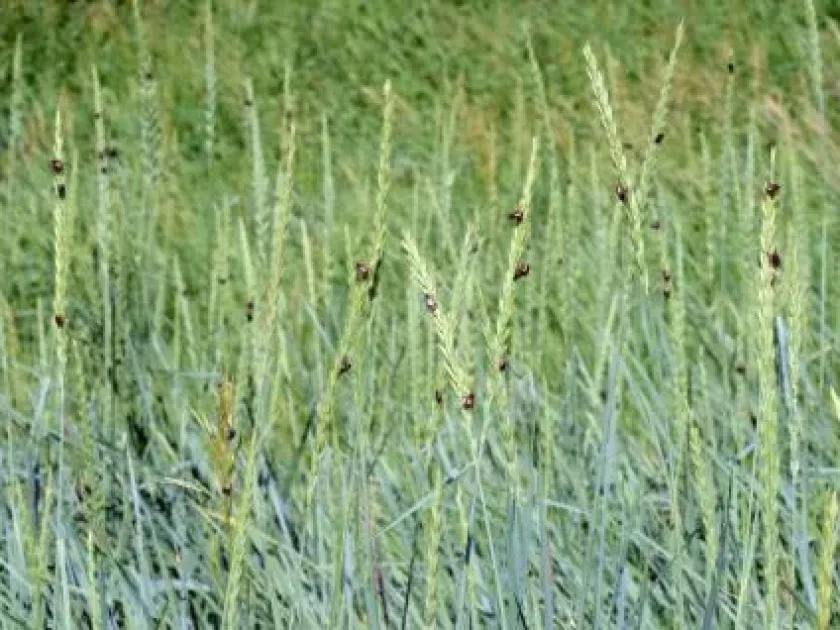
Description
Sowing dates
The optimal time for sowing Leymus ramosus is early spring, as soon as the soil reaches a temperature of 5-8 degrees Celsius. Early planting allows the seeds to utilize the moisture accumulated after winter, which is essential for successful germination in arid environments.
Late autumn sowing is also a viable option. In this case, seeds undergo natural stratification during the winter, which can lead to more uniform emergence in the following spring, provided the seeds do not germinate prematurely before the cold sets in.
The seeding rate is typically between 10 and 15 kilograms per hectare, depending on the method used and the specific soil type. Seeds should be placed at a depth of 2-4 centimeters to ensure a stable environment for initial growth.
Post-sowing rolling is a crucial agronomic practice for this crop. It improves soil-to-seed contact and helps conserve moisture in the upper soil layer, which is vital for the establishment of a robust seedling stand.
Since the initial growth stage of this perennial grass is quite slow, effective weed management is necessary during the first year to minimize competition and ensure that the young plants can develop their root systems without suppression.
Growing requirements
Leymus ramosus, belonging to the Poaceae family, is a highly resilient perennial grass. It is perfectly adapted to continental climates characterized by low annual precipitation and hot, dry summers.
The plant thrives in sandy or loamy soils and has a profound root system that can reach deep soil horizons, allowing it to access moisture even in extremely dry conditions. This makes it an ideal candidate for soil stabilization.
One of the key traits of this species is its high tolerance for saline and carbonate-rich soils. It is frequently used in the restoration of degraded ecosystems and for reclaiming saline land where more sensitive crops cannot survive.
As a light-loving plant, it requires open, sunny areas to reach its full potential. Shade from surrounding vegetation or dense weed cover significantly inhibits its growth and reduces the overall vigor of the stand.
Its exceptional winter hardiness allows it to survive harsh, snowless winters without significant damage to its vegetative parts, ensuring the stability and longevity of the grass cover for several consecutive years.
Yield
The biomass yield of Leymus ramosus depends largely on moisture availability and the age of the stand. Under favorable conditions, farmers can expect dry matter yields of 20-30 centners per hectare.
Seed production generally ranges from 3 to 6 centners per hectare. To maximize seed yields, nitrogen fertilization during early spring is recommended to stimulate growth and the development of generative organs.
Peak productivity typically occurs in the third or fourth year after establishment, as the root system becomes fully mature and the plants form dense, productive clumps. Management practices are needed to sustain this yield over time.
Early spring harrowing is an effective way to remove old, dead matter and improve soil aeration, which promotes new tiller formation and helps maintain high productivity levels throughout the life of the stand.
When used for grazing, controlled rotation is essential. Excessive grazing can deplete nutrient reserves in the rhizomes, leading to poor regrowth; therefore, a structured grazing management plan is crucial for sustainability.
Main diseases and pests
Leymus ramosus possesses strong natural resistance to most common grass diseases. However, in cases of waterlogging or excessive humidity, fungal infections such as rust or powdery mildew may occasionally appear.
Pests such as cereal flies and aphids can sometimes cause damage, particularly to the generative organs, which can result in lower seed quality. Monitoring these populations during the growing season is advised.
In years with high locust or grasshopper activity, the crop may require immediate protective measures, as these pests can rapidly consume the vegetative biomass if left unmanaged in large groups.
Root-related diseases are very rare, as the plant's high adaptation to dry environments typically creates conditions that are unfavorable for most soil-borne pathogens. Good soil drainage further mitigates these risks.
Overall, the crop requires relatively low input and management, making it an economically attractive choice for agricultural restoration projects or extensive livestock farming in challenging, semi-arid regions.
Harvesting
Harvesting for seed should occur during the wax maturity phase, when the ears turn yellow. Timely harvest is critical to prevent seed shattering, as the seeds easily disperse when the stems are disturbed by wind.
For high-quality forage, the grass should be cut during the heading phase. At this stage, the plant has the highest concentration of proteins and essential nutrients, which are vital for livestock health.
Standard mowing equipment is suitable for harvest, but the cutting height must be carefully set to avoid damaging the nodes, which ensures quick regrowth and prevents excessive depletion of the plant's resources.
Post-harvest processing involves cleaning the seeds and drying them to a moisture content of 12-14%. Properly stored seeds can maintain their viability for extended periods in well-ventilated storage facilities.
Hay should be stored in dry, airy conditions to prevent mold and nutrient loss, ensuring that the forage retains its value throughout the winter feeding period when it is most needed by livestock.