
Isachne pauciflora
Isachne pauciflora
Description
Growing requirements
Isachne pauciflora is a perennial grass species belonging to the Poaceae family. Native to tropical and subtropical regions, this plant is primarily found in wetland ecosystems, riverbanks, and marshy meadows, reflecting its high demand for soil moisture throughout its lifecycle.
Regarding cultivation requirements, the species thrives in humid environments with consistent water availability. It prefers acidic to neutral soils that retain moisture well. Unlike many conventional fodder crops, it can tolerate periodic waterlogging, which makes it suitable for lands prone to seasonal flooding.
The climatic preferences for Isachne pauciflora include a warm, frost-free environment with average temperatures ranging between 22°C and 30°C. It is highly sensitive to cold, which limits its commercial cultivation to tropical regions where growing seasons are year-round.
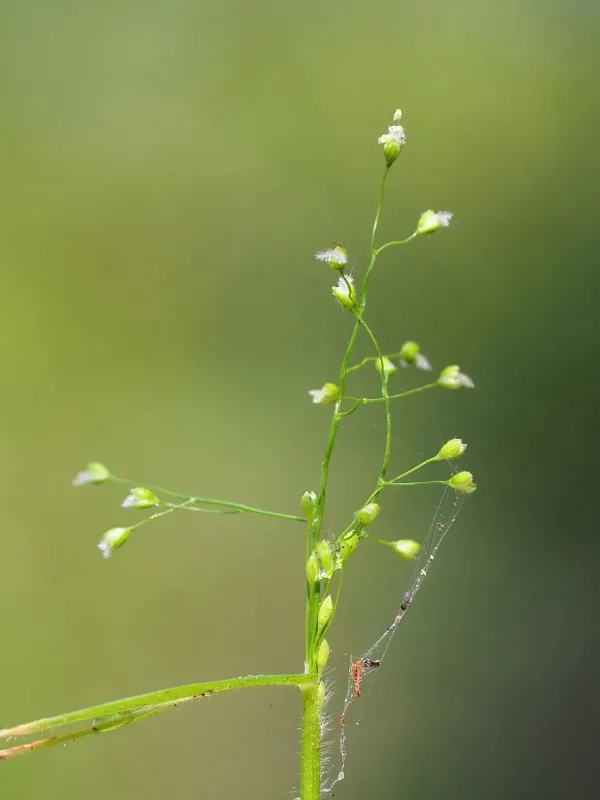
Botanically, the plant is characterized by a slender habit with heights generally reaching up to 60 centimeters. Its foliage consists of narrow, linear leaves that provide high nutritional quality for livestock, while the inflorescence is a sparse panicle, from which the name 'pauciflora' (few-flowered) is derived.
Agricultural use is centered on its role as a pasture grass. It is valued for its persistence under heavy grazing pressure and its ability to rapidly produce biomass in humid conditions where competitive exclusion by other species may otherwise occur.