
Isachne kunthiana
Isachne kunthiana
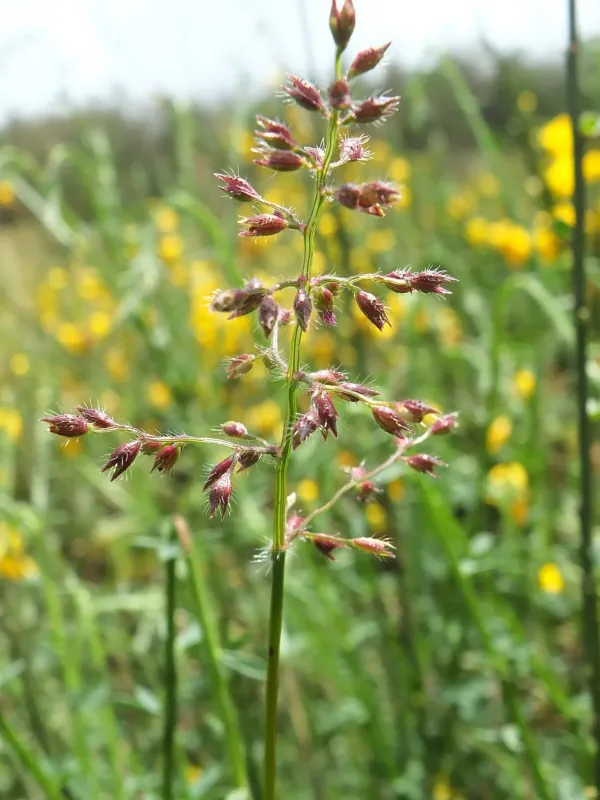
Description
Growing requirements
Isachne kunthiana is a perennial grass species belonging to the Poaceae family. Like other members of the genus Isachne, it is characterized by its adaptability to specific moist environmental niches and serves as a vital component in local grassland ecosystems.
The plant thrives in regions with high precipitation and requires consistently moist soil to reach its full developmental potential. It is frequently identified in riparian zones, wetlands, and other water-logged areas, which indicates its high tolerance for soil saturation.
Regarding soil requirements, this grass prefers organic-rich substrates with a neutral to slightly acidic pH level. It does not perform well in sandy or nutrient-poor soils, as it relies on a steady intake of minerals from the topsoil to maintain its growth cycles.
Climate needs are strictly tropical or subtropical, characterized by consistently high thermal energy throughout the year. The species is highly sensitive to cold and cannot survive frost, meaning it must be cultivated within specific latitudinal zones where temperature fluctuations remain minimal.
Botanically, Isachne kunthiana features distinct panicle inflorescences and structural traits that allow it to compete effectively in dense, high-humidity vegetation covers. Its capacity to form dense mats makes it useful for soil stabilization in sensitive, moisture-rich ecological zones.