
Isachne clarkei
Isachne clarkei
Description
Growing requirements
Isachne clarkei is a perennial grass species belonging to the Poaceae family. This plant is known for its role in specific ecosystems where it acts as a significant component of natural vegetation, often found in regions characterized by distinct moisture cycles.
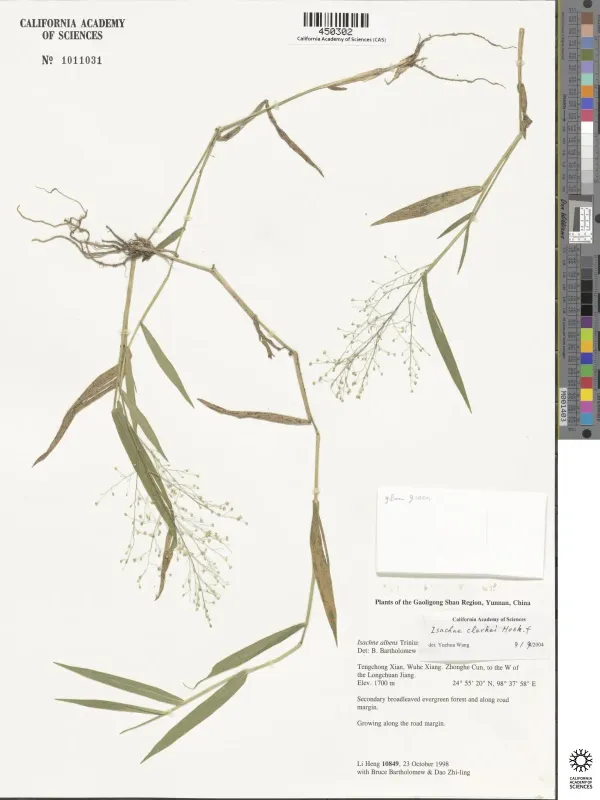
Botanically, Isachne clarkei is distinguished by its fibrous root system and slender culms, which are typical adaptations for grass species in competitive environments. The leaves are generally lanceolate and adapted to maximize photosynthetic efficiency under moderate to high light intensities.
The plant has specific soil requirements, preferring well-drained loamy soils that can retain moisture without becoming waterlogged. It thrives in soils with moderate organic matter content, which supports its steady growth throughout the season.
Climatic requirements focus on warmth and consistent hydration. As a plant naturally evolved in warmer latitudes, it does not tolerate frost and prefers regions where the growing season is long and temperatures remain above 15 degrees Celsius.
In terms of agricultural utility, Isachne clarkei is primarily valued for its palatability and nutritional content when used as forage. It provides essential biomass that can be harvested for hay or used for managed grazing, contributing to local sustainable livestock production systems.
Main diseases and pests
Fungal pathogens represent the primary biological threat to Isachne clarkei, particularly during phases of high relative humidity. Leaf spots and rusts can reduce both the quantity and quality of the forage if not managed through proper field spacing and air circulation.
Insect pests, including various coleopteran and homopteran species, may target the foliage and reproductive structures. Integrated pest management strategies, focusing on biological controls, are recommended to maintain plant health without excessive reliance on synthetic chemicals.
Weed competition is a significant challenge during the establishment phase. Because the plant establishes its root system gradually, it requires weed-free conditions to ensure that resources are not diverted to non-productive species during the early weeks of growth.
Soil-borne diseases can be mitigated by ensuring adequate drainage and avoiding monoculture practices that lead to the buildup of specialized pathogens. Crop rotation is an essential tool for maintaining long-term soil health and plant vigor.
Environmental stress, such as extreme heat combined with drought, can lead to premature senescence of the plant. Strategic irrigation management is therefore a critical component of the agrotechnical plan for this specific grass species in drier, high-temperature zones.