
Isachne dispar
Isachne dispar
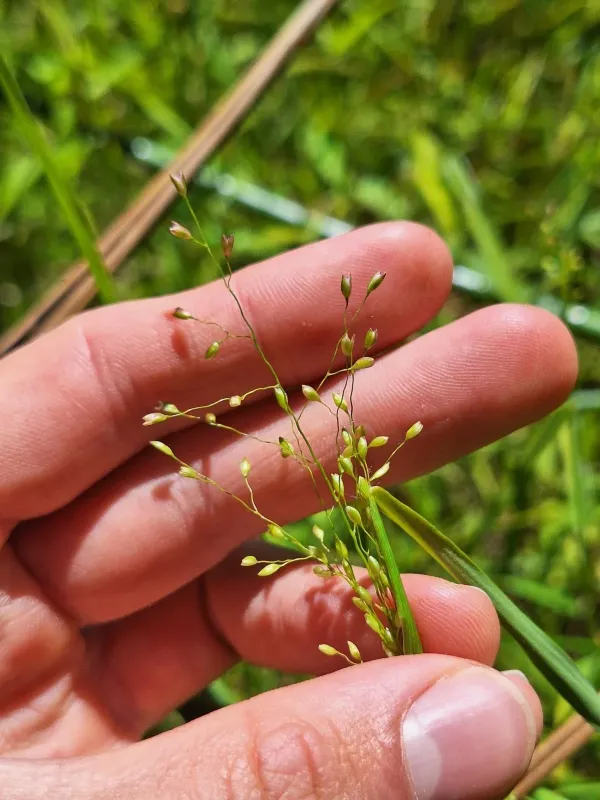
Description
Growing requirements
Isachne dispar is a perennial grass species belonging to the family Poaceae. This plant is known for its creeping habit and ability to form dense mats, which is an evolutionary advantage in habitats subjected to frequent physical disturbance.
Native to tropical and subtropical regions, this grass primarily thrives in humid environments such as marshy areas, wet meadows, and the riparian zones of various water bodies. Its geographical distribution is tightly linked to areas with consistent moisture availability.
Botanically, it is characterized by culms that often root at the nodes, which facilitates vegetative propagation. The inflorescence is a panicle, which can vary in density, and the spikelets are typically small, a common feature within the genus Isachne.
Regarding climatic requirements, the plant necessitates warm temperatures and a high humidity index. It is not adapted to cold climates or arid conditions, as its physiology is optimized for constant metabolic activity in water-saturated soil environments.
In terms of agricultural use, Isachne dispar is valued as a pasture plant. Due to its resilience and rapid regrowth, it provides essential green forage in tropical pastoral systems, particularly in landscapes where other, more demanding crops may fail.
Main diseases and pests
The primary threats to this species include fungal leaf blights and root rot caused by persistent waterlogged soil conditions. Proper site management, including controlled grazing, is essential to mitigate the risk of these infections spreading within the grass stand.
In terms of insect pests, various sap-sucking insects such as aphids and leafhoppers pose the most significant risk. These pests not only reduce the nutritional value of the biomass but also facilitate the transmission of systemic plant viruses within the field.