
Isachne albens
Isachne albens
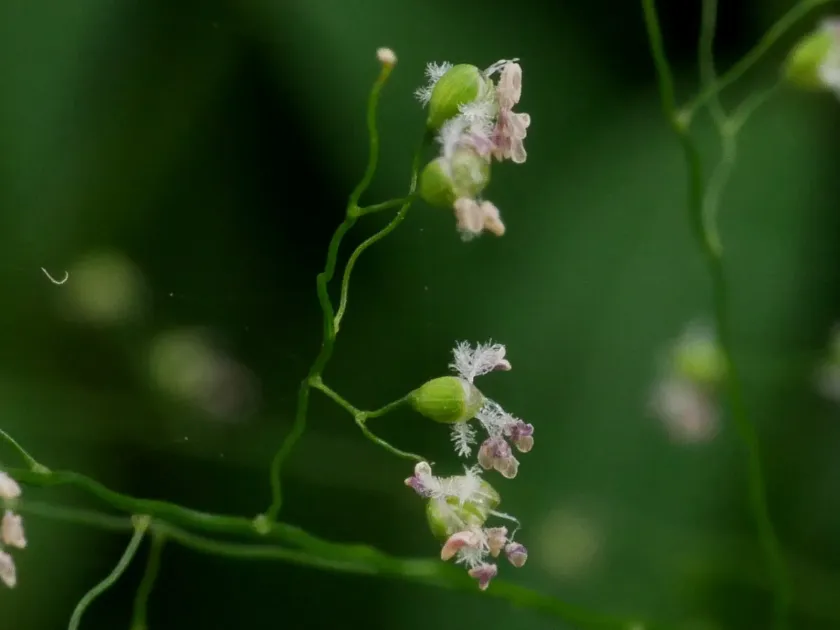
Description
Growing requirements
Isachne albens is a perennial grass species belonging to the Poaceae family. It is native to the tropical and subtropical regions of Asia, where it thrives in humid, shaded habitats, often found in marshy areas or the understory of forest clearings.
The plant is characterized by its trailing or ascending stems that can easily root at the nodes. Its leaves are lanceolate and feature a distinct whitish or pale appearance, which is a key identifying trait for this specific grass species.
Climate requirements for Isachne albens are quite specific: it demands high humidity and consistent rainfall throughout the growing season. It performs exceptionally well in semi-shaded environments where direct, harsh sunlight might dehydrate other standard forage grasses.
The soil should be moist, fertile, and well-drained, rich in organic matter to support the rapid development of its surface rooting system. It does not tolerate prolonged drought, making it unsuitable for arid environments without irrigation.
Cultivation practices focus on maintaining soil moisture and ensuring that the crop is not choked by more aggressive, faster-growing weed species during the establishment phase.
Yield
The primary agricultural use of Isachne albens is as a fodder crop for livestock in tropical regions. It is valued for its tender leaves and stems, which provide a palatable source of green forage for cattle and other ruminants.
The yield potential of this crop depends heavily on the frequency of moisture availability. Under optimal tropical conditions, it can support multiple cuts per year, provided that the soil nutrient status is maintained through organic inputs.
Beyond direct fodder production, the grass is useful for ground cover stabilization, helping to prevent soil erosion in humid, sloped areas where other forage species may struggle to establish a firm root system.
Nutritional analysis indicates that the crop provides a stable energy source for grazing animals. It is often utilized as a secondary forage source when primary pastures require a rest period to recover from intense grazing pressure.
Harvesting strategies involve cutting the grass before the reproductive stage to maximize the digestibility of the foliage. Delayed harvesting can lead to stem lignification, which reduces the overall feed quality for livestock.
Main diseases and pests
The most significant threats to Isachne albens include fungal pathogens such as rusts and leaf spots that thrive in the plant's natural, humid microclimate. Proper planting density is essential to ensure adequate airflow and reduce disease incidence.
Pests, particularly lepidopteran larvae and cereal-feeding insects, can cause significant damage to the leaf biomass. Integrated pest management, focusing on biological controls, is the preferred method to maintain crop health.
Weed competition is a critical issue, especially during the early growth stages when the grass is establishing its root network. Hand-weeding or light mechanical weeding is often necessary to ensure the crop attains a competitive height.
Root rot is a major concern if the soil becomes waterlogged for extended periods without proper drainage. Farmers should implement drainage channels in low-lying areas to prevent plant mortality caused by anaerobic soil conditions.
Given its role in animal husbandry, chemical pesticide usage must be strictly regulated or avoided entirely. Sustainable agricultural techniques and the promotion of natural predator populations are recommended to protect the crop.