
Isachne pulchella
Isachne pulchella
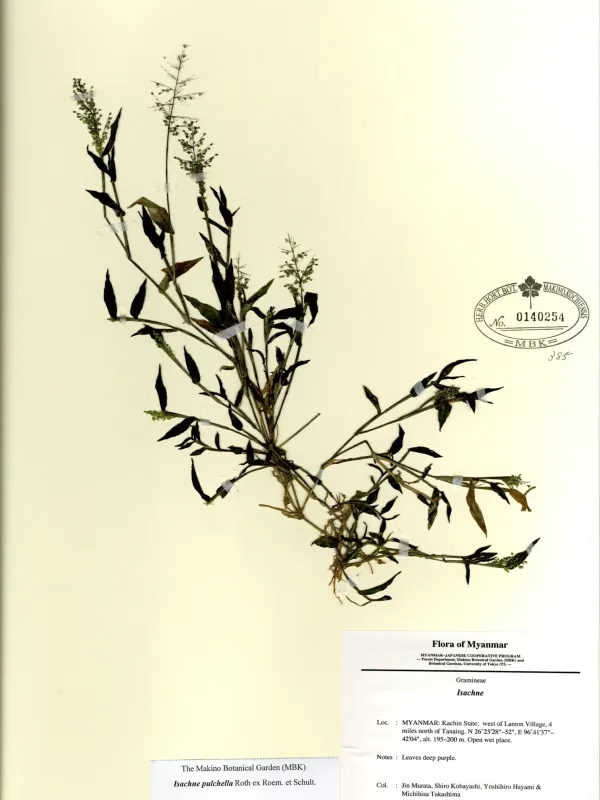
Description
Sowing dates
Isachne pulchella is a perennial herbaceous plant belonging to the Poaceae family. Its natural distribution is concentrated in tropical and subtropical wetlands, where environmental conditions support vigorous growth throughout the year.
Successful establishment of the crop begins with meticulous soil preparation. The optimal sowing time aligns with the start of the rainy season, ensuring soil temperatures consistently remain between 22 and 25 degrees Celsius for rapid germination.
The seeds of this species are remarkably small, necessitating shallow planting depths not exceeding 1 centimeter. Utilizing precision seeding equipment ensures uniform distribution and helps achieve the desired stand density across larger plots.
Once established, the plant creates a dense turf, making it an excellent candidate for managed pasture systems. Proper seeding rates are essential to maintain the competitive advantage of the crop against weed infestation during the early growth stages.
As a tropical species, Isachne pulchella is highly sensitive to cold stress and frost. Consequently, in non-tropical regions, it must be grown in controlled environments or strictly within the warm growing season.
Growing requirements
The primary environmental requirement for Isachne pulchella is high soil moisture. The plant flourishes in areas with high water tables or consistent natural irrigation, making it ideal for low-lying agricultural zones.
Loamy, well-aerated soils with high moisture retention capacity provide the best medium for root development. Neutral to slightly acidic soil pH is typically preferred for optimal nutrient uptake.
While the crop is heliophilic, it displays a level of tolerance to partial shading within dense vegetation. However, long-term productivity is maximized under full sunlight conditions.
Nitrogen-based fertilization is critical for sustaining vegetative biomass. Split applications, particularly after harvesting or grazing, significantly boost the recovery rate and biomass production of the sward.
Good soil management is imperative, as compacted soils restrict root penetration and nutrient mobility. Regular monitoring ensures that the soil structure remains favorable for the plant's metabolic processes.
Yield
The primary agricultural utility of Isachne pulchella lies in its production of high-quality green forage for livestock. Its palatable, soft tissues make it a preferred feed for ruminant animals.
High yields are achievable through intensive management, including multiple cuts per season. Under optimal conditions, the crop exhibits rapid regeneration, allowing for consistent biomass harvesting throughout the year.
Nutritional value is highest during the vegetative phase, prior to seed head emergence. Timing the harvest to capture this peak nutrient density is vital for maximizing the protein content of the collected fodder.
When used as a pasture, rotational grazing is necessary to prevent overgrazing and soil compaction. Providing rest periods allows the plant to replenish its energy reserves and maintain long-term stand vitality.
The resilience and high regrowth rate of Isachne pulchella make it a valuable asset for maintaining a stable fodder supply in regions with adequate rainfall or irrigation infrastructure.
Main diseases and pests
Fungal diseases such as rust and leaf spots represent the primary biological threats to the crop. These pathogens typically thrive in the humid conditions that also favor the growth of the grass itself.
Insect pests, including various sap-sucking species, can negatively impact biomass production if left unmanaged. Regular field inspections are recommended to identify pest pressure before it reaches economic injury levels.
Excessive stand density can impede airflow and increase humidity within the canopy, thereby promoting disease development. Proper plant spacing and field ventilation are essential preventative measures.
Weed competition can be severe during the initial establishment phase. Mechanical weeding or careful site selection before sowing are the most effective methods to ensure crop survival and uniformity.
An integrated approach involving crop rotation and the use of healthy, disease-free seed stock significantly mitigates these threats and sustains the productivity of the grass stand.
Harvesting
Harvesting is ideally performed using mechanical mowers or forage harvesters. A cutting height of 5 to 7 centimeters is recommended to ensure that the growth nodes remain intact for rapid regrowth.
Timing the harvest to coincide with the early flowering stage ensures the best balance between biomass volume and nutritional quality. Delaying the harvest leads to increased fiber content and reduced digestibility.
Harvested material can be utilized fresh or processed into silage. Effective compaction and sealing during silage production are necessary to preserve the nutritional profile and prevent spoilage.
Post-harvest management, including timely transportation and storage in ventilated areas, prevents heat damage and fungal contamination, which are common in hot and humid climates.
Systematic harvesting practices represent the cornerstone of productive management for Isachne pulchella, directly impacting the long-term profitability and success of the agricultural operation.