
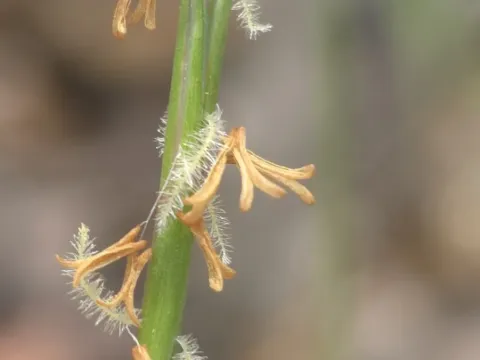
Hemarthria
Hemarthria
Hemarthria is a genus of perennial grasses belonging to the Poaceae family. These plants are widely recognized for their importance in tropical and subtropical forage systems, providing high-quality grazing material for livestock.
What the section contains


Hemarthria
The establishment of Hemarthria is typically achieved through vegetative propagation using stem cuttings or runners. This method is preferred over seeding due to the often low or irregular germination rates of its seeds.
Cuttings should be taken from vigorous, healthy plants and contain at least two to three nodes. Planting is most successful when carried out at the beginning of the rainy season, ensuring adequate soil moisture for rapid root development.
The cuttings should be placed into moist soil, ensuring that the nodes are in good contact with the earth to encourage immediate growth. A well-prepared seedbed free of aggressive perennial weeds is crucial for successful establishment.
Depending on local climate conditions, irrigation may be necessary during the initial weeks if rainfall is inconsistent, as the primary goal is to establish a strong root system before the onset of any potential dry periods.
Hemarthria is remarkably adaptable to diverse soil types, thriving in heavy clay soils where other forage grasses might struggle. It possesses a high tolerance for waterlogged conditions, making it suitable for flood-prone areas.
The plant requires full sun exposure to maximize its biomass production. Shaded environments inhibit growth, leading to thinner stems and a significant reduction in the overall nutritive quality of the forage.
Temperature is a key driver of growth, with optimal development occurring in warm conditions above 20 degrees Celsius. It is not frost-tolerant, and prolonged cold spells will induce dormancy or cause permanent damage to the foliage.
While relatively resilient to drought once established due to its deep root system, consistent moisture availability promotes the highest growth rates. Nitrogen fertilization is highly effective in boosting both yield and protein content.
Soil pH should ideally be in the neutral range. If soils are highly acidic, the application of lime is recommended to improve the availability of essential nutrients and support vigorous tiller production.
The productivity of Hemarthria is exceptional when managed correctly through rotational grazing or mechanical harvesting. It responds well to intensive management practices, including regular fertilization and controlled utilization.
For grazing, implementing a rotational system is essential to prevent overgrazing. Allowing the pasture adequate recovery periods between grazing cycles ensures that the plants can replenish their energy reserves in the stem bases.
Yields of dry matter can be substantial, often ranging from 10 to 15 tons per hectare per year under optimal conditions. The grass is prized for maintaining its palatability even as it matures, offering flexibility to farmers.
Frequent, moderate utilization encourages the plant to remain in a leafy, vegetative state, which is the most nutritionally valuable phase for livestock. This practice also promotes density, effectively suppressing weed invasion.
To maximize yield, post-harvest fertilization is advised to stimulate immediate regrowth, ensuring that the forage cycle remains continuous and productive throughout the growing season.
Hemarthria is generally resistant to many common pests, but it can be susceptible to foliar fungal diseases during periods of high humidity and poor air circulation. Leaf spots are a frequent symptom of such infections.
Insects like leafhoppers can cause damage by feeding on the sap, which not only stresses the plant but also poses a risk for the transmission of viral diseases that can stunt growth and reduce tillering.
Preventative management is key, starting with the avoidance of over-accumulation of dead plant material at the base of the sward, which creates a humid microclimate conducive to fungal development.
Regular inspection of the pasture is necessary to detect early signs of infestation. In cases of severe outbreaks, targeted fungicidal or insecticidal applications may be required to protect the crop.
Choosing resistant or locally adapted varieties is the most sustainable strategy for disease management, as these cultivars have evolved to cope better with regional pathogens and environmental stressors.
Mechanical harvesting for hay or silage is a common practice for Hemarthria. Due to the coarse nature of the stems, thorough drying is necessary when making hay to prevent spoilage and ensure storage longevity.
For silage, the crop should be harvested at the early flowering stage. Wilting the material to approximately 65% moisture content is critical for achieving optimal fermentation, which preserves the nutritive value of the feed.
When cutting the grass, it is important to maintain a cutting height of at least 5 to 8 centimeters. Cutting too close to the ground can damage the growing points and significantly delay the recovery of the sward.
If the field is used for grazing, livestock should be moved onto the plot when the height reaches the target level and removed before the plants are grazed down too severely to ensure quick recovery.
Proper harvesting techniques not only provide high-quality feed but also act as a form of maintenance, helping to eliminate mature, unpalatable stalks and encouraging the growth of new, tender shoots.