
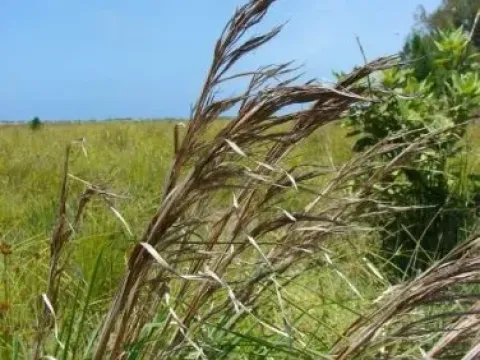
Heteropogon
Heteropogon
Heteropogon typically reproduces naturally through seed dispersal at the end of the rainy season. In agricultural settings, seeding is performed in prepared soil once stable, warm weather conditions are established.
What the section contains

Heteropogon
The seeds of this plant show high germination rates, though they require precise planting depths, ideally not exceeding 1-2 centimeters. Ensuring proper seed-to-soil contact is critical for successful emergence in humid conditions.
Under natural conditions, the optimal period for stand renewal occurs at the start of the growing season following the first significant rains. The culture develops a robust root system quickly, which is essential for strengthening the soil sod layer.
Agronomists recommend planting Heteropogon on land where erosion prevention is a priority, thanks to its ability to form dense, protective clumps. The use of specialized equipment ensures uniform seed distribution across the field.
Seeding density varies based on the intended use: lower rates are used for establishing pasture, while higher densities are common for soil conservation projects. Post-seeding rolling is recommended to maintain soil moisture and improve germination success.
Heteropogon belongs to the Poaceae family and is a characteristic species of tropical and subtropical grassland ecosystems. This perennial plant is highly adaptive to various climate zones that feature a distinct dry season.
The crop thrives in well-drained soils, including rocky, sandy, and loamy substrates. It demonstrates remarkable tolerance to low fertility levels, making it a suitable candidate for the development of marginal or degraded lands.
Possessing strong xerophytic traits, the plant is capable of enduring prolonged dry spells. Optimal development is observed in full sunlight, as heavy shading significantly reduces biomass production and overall plant vigor.
Heteropogon does not have overly restrictive temperature requirements, growing effectively between 20 and 35 degrees Celsius. The critical factor is ensuring there is no prolonged waterlogging, which is detrimental to its root system.
The plant is well-adapted to seasonal burning, a common feature in savanna grasses, which often stimulates vegetative regrowth. In agricultural practice, excessive nitrogen fertilization should be avoided to prevent compromising the plant's inherent resilience.
The agricultural utility of Heteropogon is primarily centered on livestock production. During its early growth phase, the grass offers satisfactory nutritional value for grazing cattle, sheep, and other herbivores.
Forage yield is directly dependent on grazing rotation and annual rainfall. As the plant matures, fiber content increases while nutritional value decreases, necessitating strict management of the grazing cycle to ensure quality.
In some regions, the plant is harvested for hay, although this must be done strictly before the seed formation phase. After the stems lignify, the plant becomes less palatable and less nutritious due to the high density of structural tissues.
A key economic benefit is the plant's capacity to protect the soil surface, which prevents long-term pasture degradation. By maintaining land fertility, it contributes significantly to the overall profitability and sustainability of the farm.
Yield potential can be improved with moderate application of phosphorus-based fertilizers, which encourage deep root development. However, maintaining the integrity of the existing sod remains the most effective way to ensure consistent productivity.
Heteropogon possesses a strong natural defense system against many pathogens, reducing the need for chemical intervention. Among typical threats, fungal diseases may emerge during periods of high humidity and poor aeration.
The primary pests for this crop are phytophagous insects, such as grasshoppers, which can cause significant damage to foliage during outbreaks. Management is typically handled through natural biological control methods.
Waterlogged soil conditions may lead to root rot, causing the plant to weaken and eventually perish. Effective prevention is best achieved by choosing sites with excellent natural drainage and avoiding over-irrigation.
Improper grazing management, specifically overgrazing, encourages the encroachment of invasive weeds into the Heteropogon stand. This reduces the competitive edge of the crop and leads to a gradual shift toward less desirable species.
Monitoring the field's health should be performed regularly, especially at the start of the grazing season. If leaf spotting or discoloration occurs, management strategies, such as resting the pasture, should be implemented to allow the plant to recover its physiological functions.