
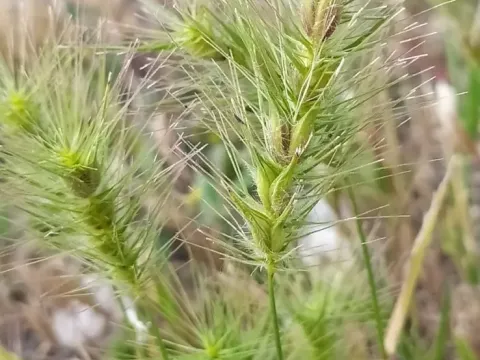
Heteranthelium
Heteranthelium
Heteranthelium is a niche grass species that requires specific timing for planting, usually aligned with the onset of the growing season in arid environments.
What the section contains

Heteranthelium
Spring sowing is generally recommended when soil temperatures reach stable levels, ensuring rapid and uniform germination across the field.
In regions with mild winters, autumn sowing can be a viable strategy to utilize soil moisture effectively for early root development.
Seeds should be placed at a shallow depth of approximately 1–2 centimeters, as deeper burial can prevent the seedlings from reaching the surface.
Row planting with spacing of about 15 centimeters is the standard practice, facilitating proper crop management and weed control during the establishment phase.
As a plant native to dryland environments, Heteranthelium exhibits exceptional drought tolerance, thriving in regions with minimal annual precipitation.
The crop prefers well-drained, sandy or light loamy soils and performs poorly in heavy, clay-rich areas prone to waterlogging.
High levels of solar radiation are essential for the optimal physiological development of this species, requiring open sites with no significant shading.
Heteranthelium is highly adapted to extreme temperature fluctuations, characteristic of steppe and semi-desert climates throughout the growing cycle.
While tolerant of various soil conditions, it prefers a near-neutral pH and performs best when soil nutrients are managed through moderate fertilization.
The economic potential of Heteranthelium lies in its ability to provide forage biomass in environments where traditional crops often fail to establish.
Overall biomass yield is closely linked to moisture availability during the critical vegetative growth phases of tillering and stem elongation.
Sustainable pasture management is key, as grazing intensity must be carefully balanced to prevent long-term degradation of the soil and root systems.
Seed production is generally stable even in poor growing seasons, making the species an excellent candidate for landscape restoration projects.
Applying minimal nitrogen input during the early spring can significantly boost productivity on marginal lands used for forage production.
The primary threats to this crop involve fungal infections such as rusts, which can proliferate rapidly if ambient humidity levels remain consistently high.
Common agricultural pests like grasshoppers can cause significant damage to the leaf tissue, especially during peak population cycles in steppe areas.
Root rot and other soil-borne pathogens represent a risk if the sowing density is too high, creating a microclimate favorable for fungal development.
Integrated pest management strategies focusing on early detection and appropriate site selection remain the most effective ways to mitigate crop losses.
- Regular inspection of the crop for early signs of pathogen growth.
- Maintaining optimal stand density to improve airflow and reduce fungal risks.
Harvesting for forage should ideally occur at the heading stage to capture the best balance between protein content and dry matter volume.
When harvesting for seeds, farmers must carefully monitor moisture levels to avoid losses due to premature shattering of the seed heads.
Post-harvest drying is a critical step, as reducing the moisture content of seeds to under 14 percent ensures stability during long-term storage.
In pasture settings, rotational grazing is recommended to allow the crop to recover and produce sufficient regrowth for the following season.
Cleaned and dried seeds should be stored in cool, ventilated facilities to maintain high germination rates for future planting cycles.