
Giant lemongrass
Cymbopogon giganteus
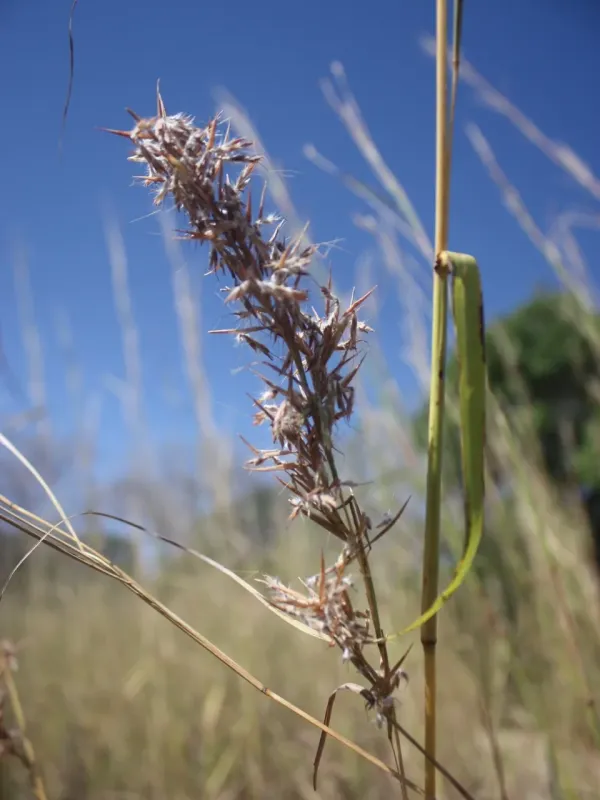
Description
Sowing dates
Giant lemongrass, scientifically known as Cymbopogon giganteus, is a perennial grass of the Poaceae family. It is typically propagated vegetatively by splitting established clumps to ensure genetic uniformity and faster establishment.
Planting usually occurs at the onset of the rainy season, allowing the plants to utilize natural moisture for optimal root system development before the dry periods begin.
The spacing between plants should be approximately 60 to 90 centimeters. This density allows for adequate light penetration and air circulation, which are crucial for preventing fungal infections in the dense foliage.
Prior to planting, the soil must be thoroughly prepared with deep plowing and the addition of well-decomposed organic matter to ensure adequate drainage and nutrient availability.
Initial irrigation is necessary immediately after planting if rainfall is insufficient, as the young plants require a stable, moist environment to establish themselves firmly in the field.
Growing requirements
This crop thrives in well-drained, fertile, loamy, or sandy soils. It is highly sensitive to waterlogging, which can quickly lead to root rot and significant stand loss.
As a sun-loving plant, Cymbopogon giganteus requires full exposure to sunlight throughout the day. Shade significantly reduces the biomass yield and the concentration of essential oils in the leaves.
The plant prefers warm, tropical climates. It is highly intolerant of frost, and temperatures consistently below 15 degrees Celsius can severely inhibit growth and even kill the plants.
Soil pH should ideally be neutral or slightly acidic. If the soil is too alkaline, micro-nutrient deficiencies, particularly iron and manganese, may occur, leading to chlorosis.
Regular fertilization with nitrogen-based fertilizers is beneficial for promoting leaf growth, which is the primary economic component of the plant during the vegetative phase.
Yield
The yield of giant lemongrass is measured by the total weight of harvested leaves and stems. With proper management, commercial plantations can produce several harvests per year.
The first harvest is usually performed 7 to 9 months after planting, once the plants have developed a sufficiently robust root system and dense foliage canopy.
Essential oil yield is the main quality metric. Harvesting at the peak of vegetative growth, before the plant enters a reproductive stage, often results in the highest oil quality.
Plant productivity generally peaks between the second and third years. After this period, many growers opt for replanting or dividing the clumps to rejuvenate the stand and restore high yields.
Advanced steam distillation processes are used to extract the essential oils. The efficiency of this process depends on the rapid handling of the biomass after harvesting to prevent volatile oil loss.
Main diseases and pests
Fungal diseases such as leaf rust are the most common issues, particularly when the plantation is overcrowded or has poor drainage, leading to high humidity near the base.
Root rot caused by pathogenic soil fungi is a major threat in poorly drained soils. Prevention is strictly tied to soil management and ensuring water flows away from the root zone effectively.
Various insect pests, including stem borers and aphids, can damage the crop. Integrated pest management (IPM) is recommended to control these populations without harming the essential oil quality.
Mites can be problematic during hot, dry spells. They damage the leaf tissue and reduce the overall photosynthetic capacity of the plant, which indirectly affects oil production.
Constant field monitoring is required to detect early signs of infestation or disease, allowing for localized treatments instead of broad-spectrum pesticide applications.
Harvesting
Harvesting is typically done manually or with mechanized cutters by shearing the leaves at a height of 10 to 15 centimeters above the soil to allow for rapid regrowth.
The timing of the harvest is critical; cutting should be performed during dry, sunny weather. Harvesting wet material can lead to rapid decay and a decrease in the quality of the essential oil.
Post-harvest handling must be swift. The cut biomass should be transported to the distillery as soon as possible to avoid fermentation and the oxidation of aromatic compounds.
If the material is to be stored, it must be spread out in a well-ventilated, shaded area. Keeping the material in large, dense piles will lead to heat buildup and oil loss.
Proper harvest logistics, including the efficient transport of raw material to the processing facility, are essential for maintaining the economic viability of the lemongrass enterprise.