
Giant plume grass
Saccharum giganteum
Description
Growing requirements
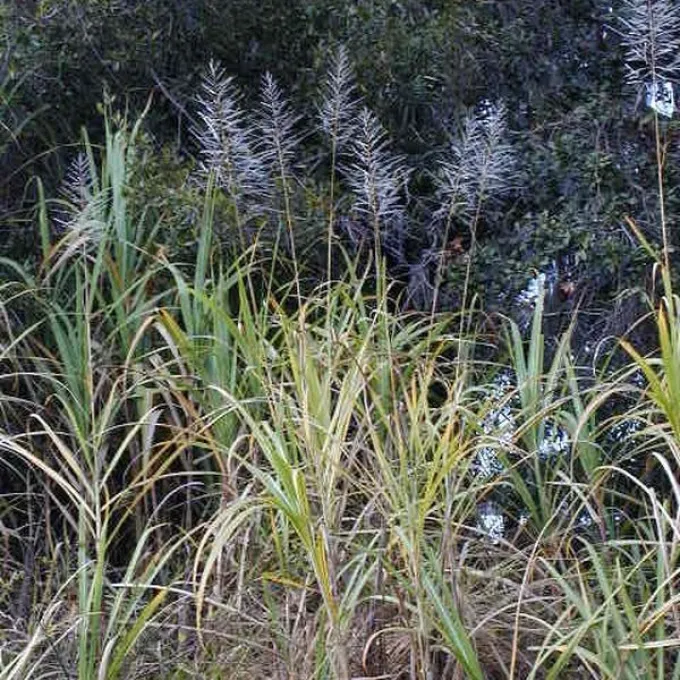
Giant plume grass (Saccharum giganteum) is a tall perennial grass species belonging to the Poaceae family. It is native to the southeastern United States, where it thrives in moist environments, including wet prairies, marshes, and riverbanks.
Botanically, it is characterized by its large, upright stature, reaching heights of up to 4 meters. The plant produces long, arching leaves and distinct feathery inflorescences that appear in late summer, providing significant aesthetic and ecological value.
The crop requires constant moisture to achieve maximum yield, making it an excellent candidate for marginal, waterlogged land that is otherwise unsuitable for conventional food crops. It is notably resilient to high soil saturation levels.
Regarding soil requirements, it prefers rich, slightly acidic to neutral substrates. Although it is highly adaptable, it shows superior vigor in high-organic-matter soils where nutrient availability is consistently high throughout the growing season.
In terms of agricultural use, Saccharum giganteum is primarily explored for its potential as a sustainable source of biomass for energy production. Its dense fiber content allows for efficient processing into bioenergy pellets and industrial cellulose products.
Main diseases and pests
Giant plume grass generally exhibits robust health and few significant pest problems. However, in enclosed or stagnant air environments, fungal pathogens such as rusts or leaf spots may occur, particularly if foliage remains wet for extended periods.
Occasional infestations by stem-boring insects may affect the integrity of the culms. Effective management involves removing and destroying infected plant tissue to break the life cycle of the pests during the winter dormant phase.
Poor drainage combined with excessive fertilization can sometimes invite root-zone pathogens. Maintaining balanced nutrient levels is crucial for ensuring the longevity of the plant stool and preventing the onset of rot diseases.
While the plant is highly competitive against weeds, excessive weed pressure during the establishment phase can hinder its initial growth. Early intervention with mechanical weeding ensures the crop gains a competitive advantage.
Pest and disease management for this species is largely preventative. Utilizing healthy rhizome stocks for planting and ensuring adequate space between individuals are the most effective strategies for maintaining high-yielding stands.