
Goniolimon incanum
Goniolimon incanum
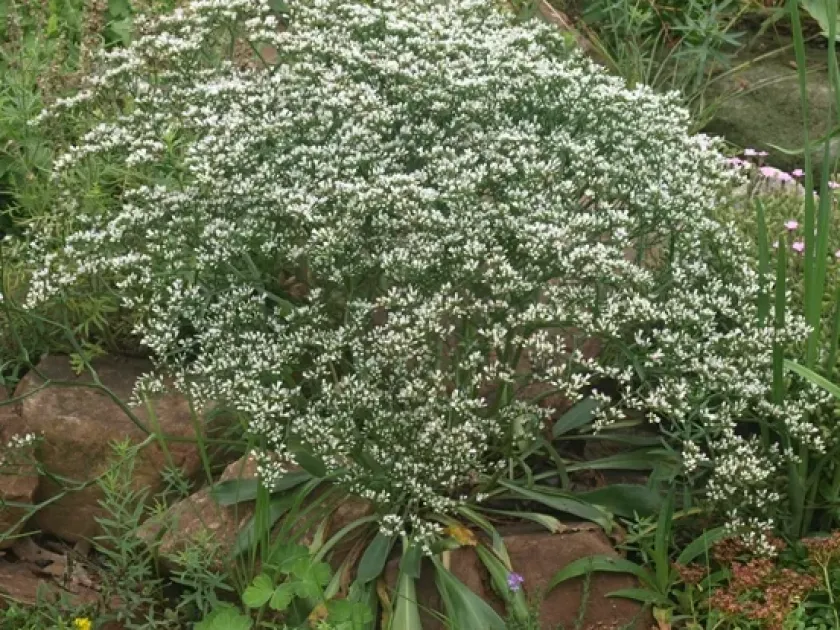
Description
Sowing dates
Goniolimon incanum belongs to the Plumbaginaceae family. It is a perennial herbaceous plant valued for its structural stability and its ornamental potential in landscape design.
Seed propagation is the primary method of multiplication. Sowing should be performed in well-drained, sterile substrate to prevent early dampening-off diseases, which the seedlings are sensitive to.
Pre-chilling or stratification of seeds for several weeks significantly improves the germination rate. Seeds should be sown on the surface and lightly covered with vermiculite or fine sand.
Seedlings require bright indirect light and good ventilation. Transplanting to individual pots is recommended once the first true leaves have developed to avoid root disturbance later.
Establishment in the field requires a period of root development. During the first growing season, the plant focuses on rosette formation rather than flowering.
Growing requirements
This species is highly adapted to arid environments, naturally occurring in saline and sandy habitats. It demonstrates excellent tolerance to soil alkalinity and low fertility levels.
The most critical requirement for Goniolimon incanum is perfect drainage. It will not tolerate heavy or waterlogged clay soils, which quickly lead to crown rot and mortality.
Full sun is essential for the plant to maintain its compact habit and to produce high-quality flowering stems. Lack of light results in weak, spindly stems and reduced bloom density.
No special fertilization is required for this plant. In fact, excessive nitrogen application often leads to lush foliage at the expense of flower production and winter hardiness.
Drought tolerance is a key feature of this plant. Once established, it requires minimal to no supplemental irrigation, making it an excellent choice for low-maintenance xeriscapes.
Main diseases and pests
The primary threat to Goniolimon incanum is fungal infection, particularly root rot, triggered by excessive soil moisture and poor air circulation around the crown.
Pests are generally not a major concern for this plant. However, in enclosed or humid environments, aphids or spider mites may occasionally colonize the underside of leaves.
Weed competition is a significant factor in the early stages of plant growth. Young plants can be easily overwhelmed by fast-growing annual weeds, necessitating regular weeding.
Winter damage is rare unless the soil remains saturated during freeze-thaw cycles. Adequate drainage serves as the best defense against cold-related tissue damage.
Monitoring for signs of powdery mildew is advised during periods of high humidity. If identified, ensuring better air circulation and reducing moisture levels is usually sufficient for recovery.
Harvesting
Goniolimon incanum is widely harvested for the dried flower industry. Its rigid stems and durable florets make it an ideal candidate for long-lasting decorative arrangements.
Harvesting timing is critical. Stems should be cut when the florets are fully open but before they begin to fade. Harvesting should take place only after morning dew has completely evaporated.
For optimal drying, stems should be gathered into loose bundles and hung inverted in a dark, warm, and well-ventilated area to preserve the original color intensity.
The dried stems maintain their structural integrity for years. They are often used as fillers in professional floral arrangements due to their unique texture and resilience.
Post-harvest handling should be minimal. Stems are sturdy, but they should be handled with care to prevent the shattering of dried florets if the material becomes too brittle.