
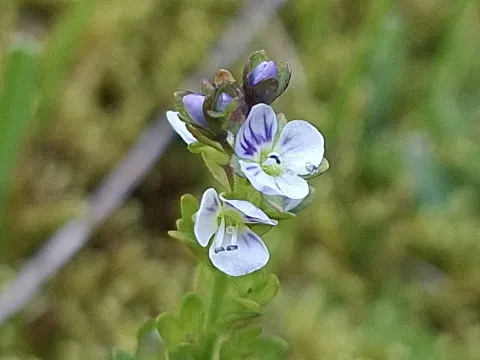
Thyme-leaved speedwell
Veronica serpyllifolia
Thyme-leaved speedwell (Veronica serpyllifolia) is a herbaceous perennial belonging to the Plantaginaceae family. It is native to temperate regions of Europe and North America, frequently colonizing moist grasslands, field edges, and disturbed soils.
What the section contains
Thyme-leaved speedwell
The botanical structure of this plant features creeping stems that root at the nodes, facilitating rapid vegetative propagation. This adaptation allows the species to spread efficiently across damp environments, often acting as a ground cover in various agricultural landscapes.
Environmental requirements include moist, well-drained soil rich in organic matter. While it thrives in partial shade, it also adapts to open areas provided that moisture levels remain consistent throughout the growing season, as it is sensitive to drought.
Agronomic management of this species involves maintaining appropriate soil moisture and drainage to prevent excessive spread if it is considered unwanted. However, in medicinal cultivation, it requires careful soil preparation and weed control during the early establishment phase.
The plant has been historically utilized in traditional medicine for its chemical properties, including various flavonoids and glycosides. It serves as a secondary forage component in some pasture systems, contributing to the overall diversity of meadow vegetation.
Common threats to the health of thyme-leaved speedwell include fungal diseases like powdery mildew, which thrive in humid and stagnant air conditions. This pathogen manifests as white dusty spots on leaves, potentially reducing photosynthetic activity.
Leaf spot diseases, often caused by Septoria species, represent another significant threat. These diseases lead to necrotic lesions on the foliage, which can cause significant damage if left untreated during periods of high humidity.
Insect pests such as aphids and spider mites can infest the foliage, particularly when environmental stress makes the plants more susceptible. These pests sap nutrients and can stunt the growth of young, developing shoots.
Effective management strategies include improving air circulation and ensuring optimal planting density to prevent pathogen buildup. Regular scouting allows for early detection of both insect infestations and fungal outbreaks.
Biological control agents and targeted fungicides are recommended when infestation levels threaten the crop viability. Maintaining good soil health and preventing excessive moisture buildup are critical for long-term plant resilience.