
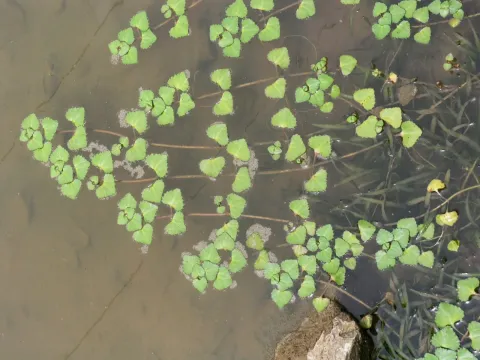
Trapella
Trapella
Trapella is a genus of aquatic plants within the Pedaliaceae family. It is a unique annual plant that completes its life cycle in standing or slowly moving freshwater bodies, including lakes, ponds, and marshy areas across East Asia, extending into parts of the Russian Far East.
What the section contains

Trapella
The plant thrives in nutrient-rich silty sediments, which provide the necessary anchorage for its root system. It requires warm water temperatures during the growing season and a significant amount of light to support its submerged and floating foliage.
One of the most fascinating aspects of Trapella is its dimorphic fruit development. It produces both submerged and aerial fruits, a strategic adaptation to ensure survival amidst fluctuating water levels. This trait allows the plant to persist in volatile environments.
In terms of agricultural or ecological management, Trapella is typically managed in its natural or semi-natural habitats. It is not a common field crop, but it plays an essential role in local biodiversity and can coexist within traditional rice-growing systems if managed correctly.
Maintaining the ecological balance of the water source is critical for the survival of the species. It prefers water with stable pH levels and is highly sensitive to chemical runoff, which is why it is often used as a bio-indicator of water quality in rural regions.
The primary threat to Trapella populations is the excessive input of agricultural fertilizers into water bodies. This leads to eutrophication, causing algal blooms that outcompete the plant for light, oxygen, and space, eventually leading to its decline.
Pests such as aquatic beetles and mollusks can cause significant damage to the plant's delicate stems and leaves. In high densities, these organisms can defoliate the plant, hindering its ability to photosynthesize and produce viable seeds.
Fungal pathogens represent another challenge, often emerging when water flow is too restricted or when the water becomes stagnant and excessively warm. Preventing these diseases requires careful monitoring of water circulation and avoiding overcrowding of plant communities.
Invasive plant species pose a constant threat by encroaching on the limited living space of Trapella. Management often requires manual intervention to clear invasive aquatic weeds that threaten to shade out the species and deprive it of nutrients.
Climate change impacts, specifically unpredictable seasonal rainfall, pose a high risk. Prolonged droughts can lead to the complete drying of its habitat, and while seeds can remain viable for a period in the mud, extreme and persistent dry conditions can lead to local extinction.