
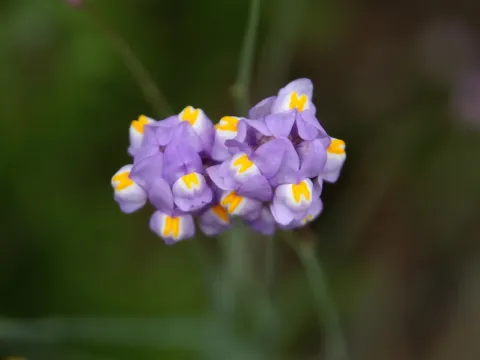
Toadflax
Linaria Mill.
Toadflax (genus Linaria) is a perennial herbaceous plant belonging to the Plantaginaceae family. Often considered a weed, it possesses distinct botanical characteristics that make it of interest for ornamental landscaping and traditional herbal medicine.
What the section contains


Toadflax
The sowing period typically occurs in early spring when soil temperatures reach approximately 8–10 degrees Celsius. Successful germination requires adequate soil moisture and, importantly, exposure to sunlight due to the small size of the seeds.
Autumn sowing is feasible in regions with mild winters, allowing seeds to undergo natural stratification. This ensures early spring growth and better establishment of the plant's robust root system before the onset of summer drought.
In a controlled cultivation setting, seeds are sown in rows spaced 30–40 cm apart. The sowing depth must be kept shallow, no more than 0.5–1 cm, to facilitate proper light penetration and emergence.
Mechanical soil compaction after sowing is a critical agronomic practice for Toadflax. It ensures optimal contact between the tiny seeds and the soil capillaries, significantly improving the rate of emergence and seedling survival.
Toadflax is renowned for its resilience and ability to thrive in poor soil conditions. It is highly adaptable to various soil textures, ranging from sandy loam to heavy clay, provided they are well-drained.
Proper drainage is the most vital requirement for successful growth. The plant is extremely sensitive to waterlogging, which can lead to rapid root rot and complete failure of the crop in poorly managed fields.
Exposure to full sunlight is essential for the healthy development of Toadflax. Insufficient light results in etiolation of the stems, reduced vigor, and a significant decrease in the production of biologically active compounds.
The plant exhibits excellent drought tolerance due to its deep taproot system, which allows it to tap into moisture reserves deeper within the soil profile. This makes it an ideal plant for low-maintenance areas.
Excessive fertilizer application, particularly nitrogen, is detrimental to Toadflax. Moderate levels of phosphorus and potassium are sufficient to support structural integrity and flowering without causing excessive vegetative growth.
Fungal diseases are the primary threats to Toadflax, especially in humid and stagnant air conditions. Powdery mildew and downy mildew are the most common infections affecting the foliage and reducing overall plant health.
Various insect pests, including larvae of specific moth species, can cause significant damage by feeding on the leaves and developing flowers. Careful monitoring during the vegetative phase is necessary to mitigate damage.
Cultural management, including regular weeding and maintaining proper plant density, is the best strategy for disease prevention. Ensuring adequate airflow between plants significantly lowers the risk of disease outbreaks.
Virus transmission by sap-sucking insects is another potential threat. Integrated pest management practices, such as using row covers or biological controls, can help manage populations of insect vectors effectively.
Due to the plant's use in herbal medicine, chemical pesticide use should be minimized or strictly regulated. Agronomists emphasize prophylactic measures and the use of healthy, disease-free seed stock to ensure crop quality.