
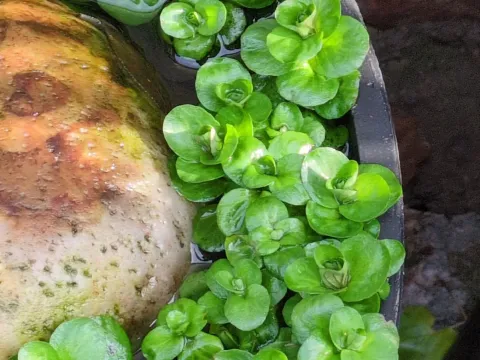
Brooklime
Veronica beccabunga
Brooklime (Veronica beccabunga) is a perennial herbaceous plant belonging to the Plantaginaceae family, characterized by its succulent stems and leaves.
What the section contains
Brooklime
Propagation is typically performed through stem cuttings, which root effortlessly when placed in wet soil or directly into shallow water.
The best time to start a new planting is in late spring, ensuring that the water temperature has reached a stable level for root development.
For cultivation purposes, cuttings are placed in moist, nutrient-rich substrates near water features or in controlled aquatic environments.
Although the plant can be grown from seeds, the vegetative method is preferred by growers due to its high efficiency and faster production time.
As a true hydrophyte, Brooklime requires a constant water supply, thriving best on the muddy banks of streams, ponds, and slow-moving ditches.
The plant performs best in full sun or partial shade, provided the moisture levels remain high throughout the growing season.
Soil or sediment should be rich in organic matter, specifically silt, which provides the necessary mineral base for rapid vegetative growth.
Optimal temperature ranges for Brooklime are moderate, as extreme heat can lead to early flowering and a decrease in the quality of the foliage.
Good water circulation is essential to prevent the accumulation of pathogens and to maintain the high oxygen levels preferred by the root system.
Brooklime is primarily cultivated for its edible foliage, which is often consumed in salads or as a garnish with a mild, peppery flavor.
Yields are maximized by periodic harvesting of young shoots, which encourages the plant to branch out and produce more vegetative biomass.
Under favorable conditions, a well-managed plantation can provide several harvests per year with high nutritional quality.
The total biomass output is heavily dependent on the water quality and the availability of nitrogenous nutrients in the aquatic environment.
Proper harvest cycles ensure that the crop remains in its vegetative stage, preventing the plant from becoming too fibrous or bitter.
Mollusks, particularly slugs and snails, are the most significant pests for Brooklime, as they can cause rapid defoliation of the succulent stems.
In conditions of stagnant water, the plant is susceptible to fungal infections that can lead to stem rot and root decay.
Maintaining proper spacing and ensuring water flow are critical strategies to mitigate the risks associated with fungal growth and pest outbreaks.
Weed encroachment is a common problem in shallow water zones, requiring manual weeding to protect the development of the crop.
- Monitoring for pest damage during humid periods.
- Ensuring consistent water quality to prevent stagnation.
- Regular cleaning of the plantation area to avoid competitive weed growth.
Harvesting should be conducted before the plant reaches its flowering stage to maintain the best flavor profile and texture.
The stems are cut back using clean, sharp tools, which stimulates the growth of new, tender shoots for subsequent harvests.
Post-harvest handling is critical, as the plant wilts rapidly; it should be cooled immediately and kept in high-humidity conditions for transport.
The cleaned produce is ready for market, offering a fresh, leafy alternative that is valued for its unique taste and nutritional properties.
With consistent care, a single plantation site can remain productive for several months, provided the environment is kept clean and sufficiently moist.