
Chaenorhinum glareosum
Chaenorhinum glareosum
Description
Growing requirements
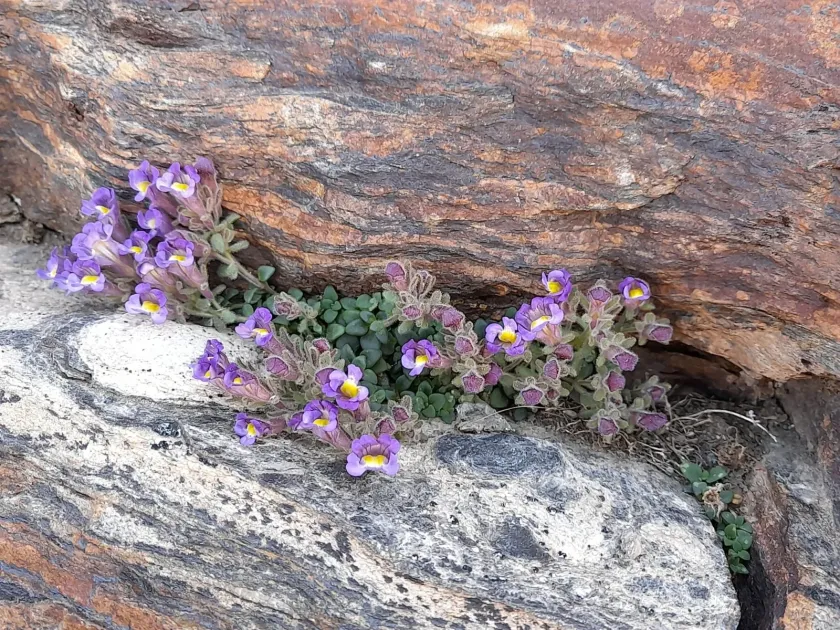
Chaenorhinum glareosum is a perennial herbaceous plant belonging to the Plantaginaceae family. Originally found in the mountainous regions of the Mediterranean, it is well-adapted to surviving in harsh, rocky environments, specifically loose scree slopes where competition from other vegetation is minimal.
Botanically, the plant is characterized by its ability to thrive in poor, stony substrates. It develops a resilient taproot that secures the plant in rocky crevices, and it produces delicate, snapdragon-like flowers that bloom in late spring and summer, adding significant ornamental value to alpine-style gardens.
For successful cultivation, strict attention to soil drainage is essential. The ideal planting medium should be sandy or gritty, mimicking natural limestone scree. Gardeners should avoid rich, moisture-retentive garden soils, as these will lead to crown rot and premature plant death.
This species demands full sun exposure to maintain its compact growth habit and promote healthy flowering. It is inherently drought-tolerant once established, but it requires protection from excessive autumn and winter rainfall, which can be lethal if the root zone becomes saturated in cold weather.
In terms of agricultural and horticultural use, Chaenorhinum glareosum is primarily cultivated by specialty nurseries for alpine garden enthusiasts. It requires little to no fertilization, as high nutrient levels often cause the plant to become leggy and lose its characteristic mountainous aesthetic.