
Thick-leaved plantain
Plantago crassifolia
Description
Growing requirements
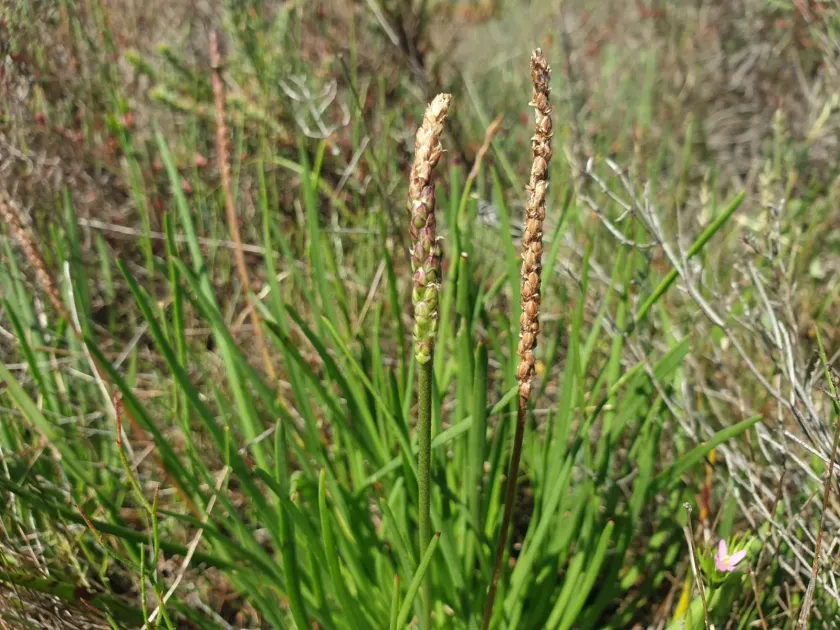
Thick-leaved plantain (Plantago crassifolia) is a perennial herbaceous plant belonging to the Plantaginaceae family. This species is widely recognized as a halophyte, perfectly adapted to saline coastal environments where common agricultural crops often struggle to thrive.
Botanically, the plant is characterized by its succulent, linear leaves that serve as an effective reservoir for water storage. This structural feature allows it to withstand extreme osmotic pressure and periods of prolonged drought, maintaining its physiological activity under harsh conditions.
In terms of climatic requirements, Plantago crassifolia thrives in Mediterranean-type climates with high solar radiation levels. It prefers well-drained, saline, or sandy soils where it can establish a robust root system capable of nutrient uptake despite high mineral content in the soil solution.
Agrotechnical practices for this crop include periodic soil moisture management to ensure optimal vegetative growth during the spring phase. While it is tolerant of salinity, controlled irrigation can significantly increase biomass production compared to strictly wild-grown specimens.
Host-plant uses are expanding as researchers explore its potential as a source of bioactive flavonoids and polyphenols. Furthermore, its ability to accumulate salts makes it a subject of interest for phytoremediation efforts aimed at restoring the productivity of degraded saline agricultural lands.
Main diseases and pests
The primary threats to Plantago crassifolia cultivation include fungal pathogens, specifically root rot, which typically occurs under poor drainage conditions. Ensuring proper aeration is the most effective way to prevent these detrimental soil-borne diseases.
Pest pressures are primarily observed from aphids and spider mites, which exploit the succulent tissues of the plant. Integrated pest management strategies, focusing on biological controls, are highly recommended to keep the harvest free from chemical residues.
Preventive maintenance involves regular inspection of leaf surfaces to detect early signs of infestation. Maintaining appropriate plant spacing also improves air circulation, significantly reducing the risk of powdery mildew and other airborne infections.
Weed management remains crucial during the plant's early establishment phase, as the growth of Plantago crassifolia is relatively slow. Mechanical weeding is effective, provided that care is taken not to damage the fragile surface roots of the young seedlings.
Consistent crop monitoring and soil analysis help maintain the balance of nutrients and pH levels, providing the plant with the best defense against environmental stressors and pathogen attacks throughout the growing season.