
Common toadflax
Linaria vulgaris Mill.
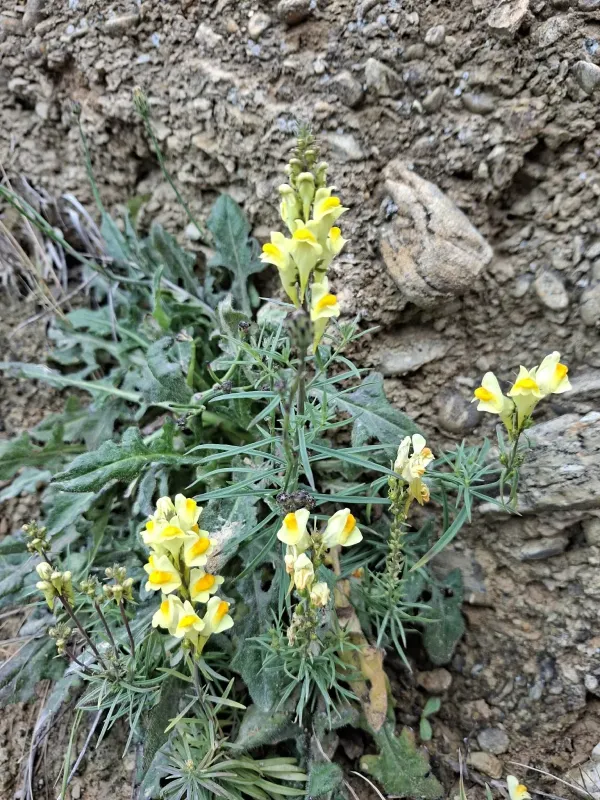
Description
Growing requirements
Common toadflax (Linaria vulgaris Mill.) is a perennial herbaceous plant belonging to the Plantaginaceae family. Originally native to Europe and Western Asia, it has successfully naturalized in many regions across the globe.
The plant thrives in temperate climates and is highly adaptable to various soil types, preferring well-drained, sandy, or gravelly soils found on road verges and fallow lands.
Regarding climatic requirements, the species is drought-tolerant and requires full sun exposure to ensure vigorous growth and abundant floral display during the summer months.
For agricultural purposes, soil aeration is crucial. The plant is considered low-maintenance, though establishing a proper plantation requires minimal weed management during the seedling phase.
Beyond its ecological value, it is widely recognized for its pharmacological profile, containing flavonoids and organic acids utilized in traditional medicine for skin and digestive health.
Main diseases and pests
Linaria vulgaris can be susceptible to rust fungi, which manifest as pustules on the leaves and can significantly reduce the quality of the harvested biomass.
Insect pests, particularly aphids and certain lepidopteran larvae, pose a constant threat by feeding on the foliage and terminal buds during the intensive growth phase.
Effective management strategies include the use of crop rotation practices and the application of pest-monitoring systems to minimize the need for chemical intervention.
Poor soil drainage may lead to root rot conditions, especially in heavy clay soils, making the plant vulnerable to soil-borne pathogens during wet growing seasons.
Ensuring adequate air circulation around the plants helps prevent the development of mildew and other fungal diseases in densely planted fields.