
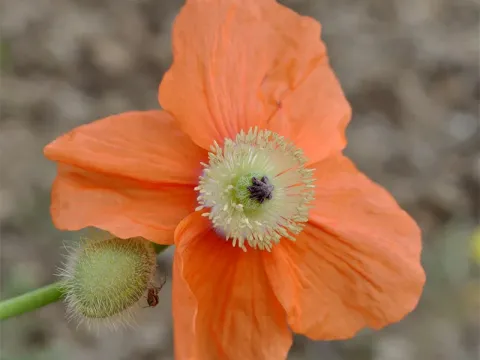
Persian poppy
Papaver persicum
Persian poppy (Papaver persicum) belongs to the Papaveraceae family. Sowing is typically performed in early spring, once soil temperatures reach 5–7 degrees Celsius, ensuring rapid and uniform germination of the small seeds.
What the section contains
Persian poppy
Winter sowing is also feasible in regions with mild winters, allowing the seeds to undergo natural stratification. The seeds should be sown at a shallow depth of 1–2 cm, as deep burial inhibits the emergence of delicate seedlings.
Proper soil preparation is essential, requiring a fine tilth and effective weed control before sowing. Since the seeds are minute, applying a light roller over the seeded area helps establish good soil-to-seed contact.
Thinning is a mandatory procedure after seedling emergence. Maintaining a distance of 15–20 cm between plants is crucial to avoid overcrowding, which significantly reduces competition for nutrients, light, and soil moisture.
Optimal plant density plays a vital role in ensuring that each plant develops sturdy stalks and fully mature seed capsules, directly contributing to the overall yield per hectare.
This crop thrives in well-lit, sunny areas with fertile, well-drained loamy or sandy soils. Excellent drainage is critical, as stagnant water and excessive soil moisture are primary causes of root decay in poppies.
While showing moderate drought resistance, Persian poppy requires consistent soil moisture during the rosette and stem elongation phases. Supplemental irrigation may be necessary during extended dry spells to maintain productivity.
The ideal temperature for development ranges from 18 to 22 degrees Celsius. The crop is known for its hardiness, capable of withstanding minor spring frosts without significant damage to the developing foliage.
The soil should have a neutral to slightly acidic pH for optimal nutrient uptake. Incorporating organic amendments such as compost or well-rotted manure before sowing provides a strong foundation for vigorous plant growth.
Inter-row cultivation is necessary throughout the growing season to ensure soil aeration. Breaking up the soil surface prevents crusting, which can otherwise impede root development and reduce gas exchange in the soil profile.
Downy mildew is a significant fungal threat characterized by chlorotic spotting on leaves. Effective management involves rigorous crop rotation, ensuring the plant is not re-introduced to the same plot for at least three to four years.
Powdery mildew represents another common challenge, particularly during humid weather. The white fungal mycelium layer interferes with photosynthesis, leading to reduced vigour and poorer quality seed production in the capsules.
The poppy weevil is a destructive pest that directly impacts yield by feeding on the interior of the seed capsules. Field scouting during the blooming period is necessary to identify and manage infestations before major damage occurs.
Aphids can frequently colonize the upper parts of the stems and flower buds, extracting sap and causing deformation. Targeted insecticidal applications should be timed correctly to prevent colony expansion during the critical budding stage.
Fusarium wilt remains a concern in poorly drained or overly compacted soils. Using high-quality, treated seeds is a recommended preventative practice to minimize the risk of soil-borne pathogens infecting young poppy plants.