
Dicentra peregrina
Dicentra peregrina (J.H.Rudolph) Makino
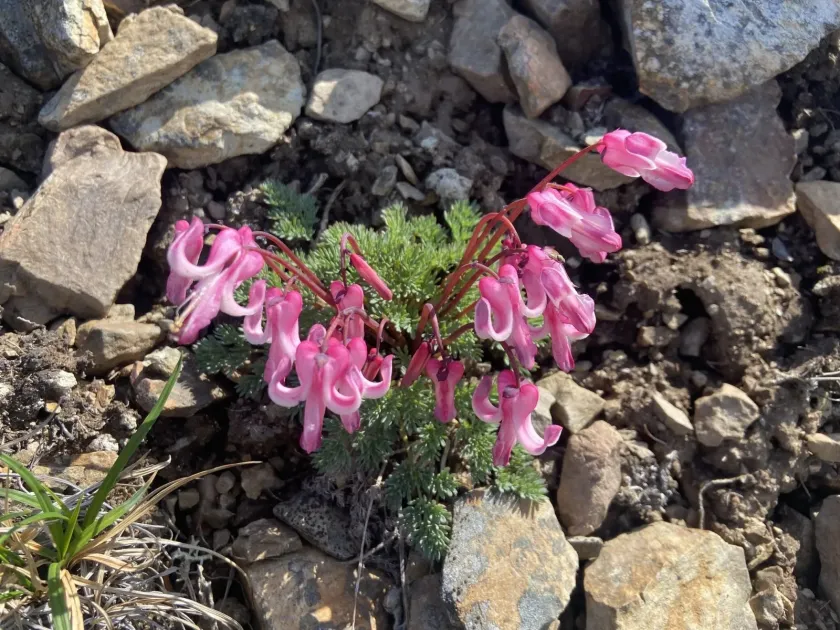
Description
Growing requirements
Dicentra peregrina is a dwarf herbaceous perennial plant belonging to the Papaveraceae family. Originating from high-altitude regions of East Asia, it has evolved to thrive in harsh rocky environments, specifically on scree slopes.
Botanically, the species is distinguished by its finely dissected, glaucous, fern-like leaves forming a compact basal rosette. Its height is minimal, typically ranging from 10 to 15 centimeters, making it an excellent candidate for specialized rock garden cultivation.
To cultivate this species successfully, growers must emulate alpine conditions. The soil must be exceptionally well-draining, typically consisting of a mixture of grit, sand, and fine gravel to prevent any moisture retention around the roots.
The plant demands a cool climate. It is sensitive to excessive heat and intense direct sunlight, necessitating a position in partial shade or an eastern exposure where it can enjoy cool morning light while being sheltered from the afternoon heat.
Agrotechnical maintenance focuses on precise irrigation. Water should be applied directly to the soil, avoiding foliage saturation to prevent physiological damage. The moisture level should be constant but never stagnant, as the plant is highly susceptible to rot.
Main diseases and pests
Root rot is the primary threat to the vitality of Dicentra peregrina, often caused by inadequate drainage or overwatering. Maintaining a gravel mulch around the plant helps keep the crown dry and prevents soil contact with foliage.
Slugs and snails present a significant risk to the succulent foliage. Monitoring for these pests is essential, especially during wet seasons. Implementing mechanical barriers like copper tape or sharp grit can discourage their approach.
Powdery mildew may occur if air circulation around the plants is poor. Pruning surrounding weeds or encroaching plants to increase airflow is a vital cultural practice to keep the foliage healthy throughout the growing season.
Fungal infections require immediate intervention with appropriate fungicides if symptoms appear. However, prevention remains the most effective strategy, centered on maintaining a dry crown area and a well-ventilated microclimate.
In regions where winters are unpredictable, protecting the plant from excessive winter wetness is crucial. Using a simple glass or plastic cover can prevent the crown from sitting in water, which is often fatal during dormant periods.