
Dutchman's breeches
Dicentra cucullaria (L.) Bernh.
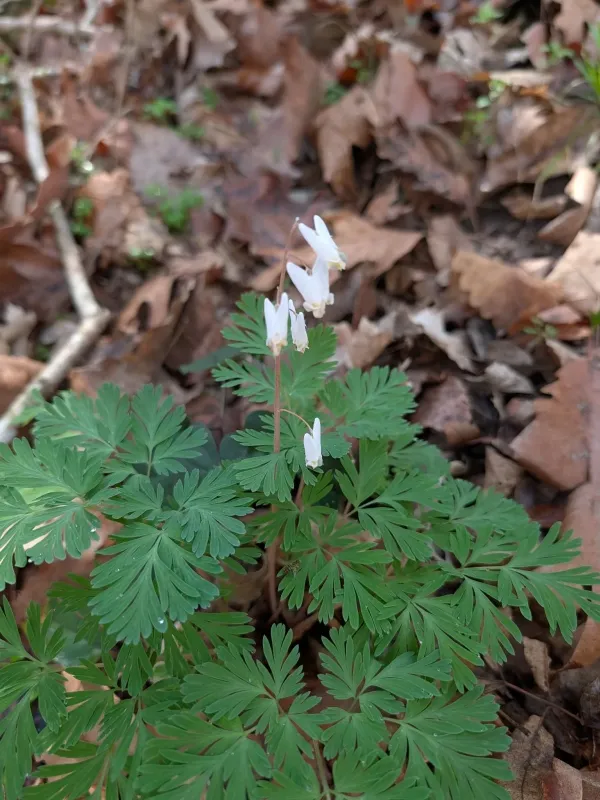
Description
Sowing dates
Dutchman's breeches (Dicentra cucullaria) is a fascinating member of the Papaveraceae family. It is a spring ephemeral that emerges early, blooms, and goes dormant before the forest canopy fully closes.
Propagation is typically achieved through division of the rhizomes. This should be performed when the plant is in its dormant stage, usually during the late spring or early summer after the foliage dies back.
Sowing seeds is possible but requires a cold stratification period. Seeds are best sown in autumn in pots or direct soil, allowing them to experience winter cycles to break dormancy before spring germination.
When selecting a site, it is essential to mimic their natural woodland habitat. They thrive in loose, humus-rich soil that is kept moist but well-draining, preventing water from pooling around the roots.
The planting depth for rhizomes should be approximately 5–7 centimeters. Once established, the colony will slowly expand each year if the environmental conditions remain consistent and undisturbed.
Growing requirements
This species demands a cool and shaded environment. It is ideally suited for north-facing slopes or under the canopy of deciduous trees that provide filtered light throughout the early spring.
Soil composition should be high in organic matter. A mix of leaf mold and sandy loam is perfect for providing the necessary nutrient content and drainage required for healthy root growth.
Water requirements are highest during the active growth and flowering stages. As the temperatures rise and the plant begins its transition to dormancy, irrigation should be significantly reduced.
Maintenance involves very little intervention once the site is chosen correctly. It is a low-maintenance perennial that benefits from an annual application of leaf mulch to mimic natural forest floor conditions.
Temperatures should remain relatively cool. Excessive heat will force the plant to enter dormancy prematurely, potentially weakening the plant for the following season's growth cycle.
Main diseases and pests
Root rot is the most significant threat to the health of the plant, often resulting from poorly drained soils. Infected rhizomes become soft and discolored, eventually failing to sprout the next spring.
Slugs and snails are common pests that feed on the foliage as it emerges. Using barriers like crushed eggshells or environmentally friendly slug pellets can protect young plants from significant defoliation.
Fungal leaf spots can occasionally occur if there is poor air circulation between plants. If spotted, remove the affected foliage to prevent the spread of spores to healthy parts of the plant.
Aphids might appear during periods of warm spring weather. They generally do not cause fatal damage but can weaken the plant, so monitoring is advised during the peak flowering time.
- Maintain appropriate spacing.
- Ensure proper drainage.
- Avoid over-fertilizing.