
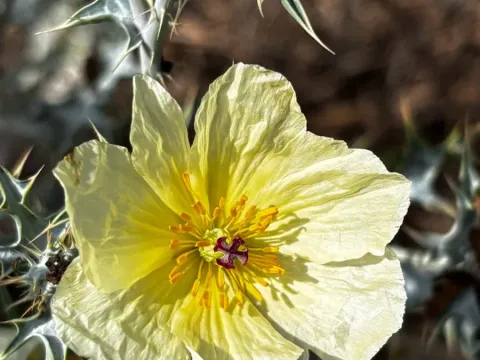
Argemone subfusiformis
Argemone subfusiformis
Argemone subfusiformis is a notable member of the Papaveraceae family. Originating from arid regions of the Americas, this species is highly adapted to environments with limited rainfall and intense solar radiation.
What the section contains
Argemone subfusiformis
Regarding soil requirements, the plant thrives in well-drained, sandy, or rocky soils. It possesses an exceptional ability to penetrate compacted soil layers due to its strong, deep taproot system, which helps in moisture extraction.
The climate must be arid or semi-arid to ensure the optimal development of the plant. Prolonged exposure to high humidity or heavy rainfall is generally detrimental to its health and can lead to rapid decay of the foliage.
Agronomic practices for this crop focus on minimal irrigation and careful site selection. It is essential to ensure that the field site has excellent air circulation to prevent the accumulation of moisture around the base of the plant.
Fertilization should be managed carefully. The plant is naturally adapted to nutrient-poor soils, and excessive nutrient application is rarely necessary, as it may interfere with the secondary metabolite production characteristic of the species.
Fungal pathogens represent the primary threat to Argemone subfusiformis. Root rot is particularly common in areas where drainage is insufficient, leading to significant yield losses if not managed promptly.
Insect pests, including aphids and spider mites, pose a risk during the early vegetative stages. These pests can cause chlorosis and stunt the growth of young plants if left uncontrolled.
Weed management is critical during the crop's establishment phase. Because the plant has a slow initial growth rate, mechanical weeding or appropriate row spacing is required to reduce competition for nutrients.
Viral infections can also affect the plant, often transmitted by sap-sucking insects. Regular scouting of the field to identify symptomatic plants is essential for maintaining crop health and vigor.
Chemical control measures should be applied with caution, keeping in mind the sensitive chemical composition of the plant tissues which may be of interest for commercial or pharmaceutical applications.