
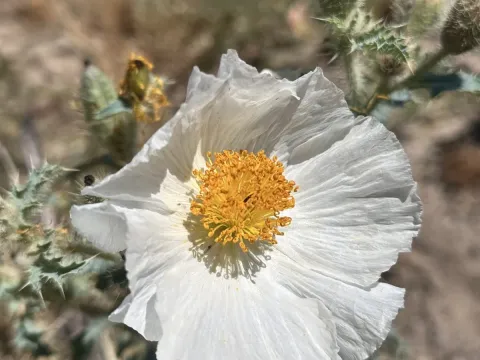
Argemone munita
Argemone munita
Argemone munita is a typical representative of arid flora, so sowing times must align with the period when the soil warms up sufficiently. In temperate climates, seeds are sown directly into open ground in the spring once the threat of frost has passed.
What the section contains
Argemone munita
The seeds of this plant feature a hard coat, requiring pre-treatment or soaking to improve germination rates. The optimal temperature for seed germination ranges from 18 to 22 degrees Celsius, ensuring steady and uniform emergence of seedlings.
The sowing depth should be minimal, no more than 0.5–1 cm, as the seeds require exposure to light to trigger growth processes. It is crucial to ensure good contact between the seeds and moist soil during the initial establishment phase.
When starting indoors, seeds are planted in individual pots in late March. Because the plant reacts poorly to root disturbance during transplanting, moving it to its permanent location must be done carefully using the root-ball transfer method.
Sowing density should be moderate, as the adult plant requires ample space to develop its robust leaf rosette. Planting should be spaced at least 30–40 cm apart to ensure proper air circulation around the bushes.
Argemone munita belongs to the Papaveraceae family and is a xerophyte adapted to life in water-limited environments. Its natural range encompasses the southwestern United States and northern Mexico, where it grows in rocky and sandy soils.
The crop requires maximum sun exposure throughout the day, as even slight shading leads to elongated stems and reduced flowering intensity. Ideal locations for planting include southern slopes or open areas that receive significant solar heat.
The plant has minimal soil requirements, preferring poor, well-draining substrates. Waterlogging is lethal for Argemone, so in heavy clay soils, it is essential to incorporate gravel or sand to improve drainage.
Irrigation should be strictly controlled and applied only during prolonged dry spells. Otherwise, the plant efficiently utilizes moisture stored in its deep taproot, making it highly resilient to adverse climatic conditions.
For fertilization, mineral fertilizers with low nitrogen content are preferred. Excessive organic matter or nitrogenous compounds promote unnecessary vegetative growth at the expense of floral development and increase the risk of fungal infections.
The primary threats to this crop are fungal diseases of the root system caused by soil waterlogging. Excessive moisture around the root collar quickly leads to tissue decay and the death of the entire plant.
Among pests, aphids and spider mites pose the greatest danger to young seedlings. These insects suck sap from the leaves, slowing plant growth and potentially transmitting viral infections to which Argemone exhibits moderate sensitivity.
In high-humidity conditions, signs of powdery mildew or leaf spot may appear on the foliage. Timely prevention through ensuring adequate ventilation between plants helps reduce the likelihood of infection spread.
Slugs and snails may damage young leaves during rainy seasons. Control measures involve mechanical collection or the use of physical barriers around the planting site, as chemical applications are not always suitable for this delicate xerophyte.
Regular weeding is important, as competing weeds increase humidity around the Argemone plants. Eliminating competition for light and nutrients is the key to maintaining the health and vitality of this drought-resistant species.