
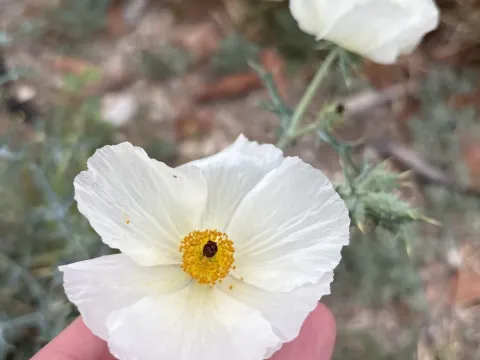
Argemone albiflora
Argemone albiflora
Argemone albiflora, known commonly as the white prickly poppy, is a member of the Papaveraceae family. In agricultural or horticultural settings, it is primarily propagated through seeds sown in early spring once the risk of frost has passed.
What the section contains
Argemone albiflora
The seeds require light and warmth for successful germination, ideally between 15°C and 20°C. They should be surface-sown or covered with a very thin layer of soil to ensure proper contact without excluding necessary solar radiation.
Given its vigorous growth pattern and prolific seed production, spacing is essential to prevent overcrowding. Proper row management helps maintain air circulation, which is crucial for the health of the foliage throughout the growing season.
This species is highly competitive. When cultivating, it is important to monitor its spread, as it can easily naturalize in fields where soil conditions are favorable, potentially affecting nearby traditional crops.
Direct seeding in the final location is preferred, as the plant possesses a taproot system that does not tolerate transplanting well. Careful planning of sowing depth and timing ensures a uniform and healthy stand of the plants.
The white prickly poppy thrives in well-drained, sandy, or gravely soils. It is remarkably adapted to drought-prone environments and can perform well even in poor soil types that are unsuitable for conventional commercial crops.
Full sun is an absolute requirement for this plant. Any form of shading results in weak, etiolated growth and significantly reduced seed yields, making selection of the site critical for successful production.
The plant performs best in neutral to slightly alkaline soil pH levels. It does not require intensive fertilization, as excessive nitrogen can actually promote vegetative growth at the expense of floral and seed development.
Moisture management is key; while the plant is drought-tolerant, it requires consistent, moderate water levels during its active flowering phase to produce high-quality seeds. However, waterlogging must be avoided at all costs.
Regular maintenance of the soil surface through light hoeing is beneficial in the early stages of growth to keep the soil aerated and to manage competing vegetation until the plants are large enough to cover the ground.
Pathogenic fungi, particularly those causing downy mildew and leaf spots, are the primary disease risks. These infections usually manifest during periods of high humidity or poor ventilation within the crop canopy.
Insect pests such as aphids and spider mites are common threats. By feeding on the plant's sap, these insects can weaken the stems and leaves, potentially causing severe stress if the infestation is not managed early.
Leaf miners can also cause aesthetic and physiological damage. These larvae tunnel through the leaf tissue, which disrupts photosynthesis and can decrease the overall vigor of the plant during the critical bloom phase.
Due to the presence of potent alkaloids in the plant tissues, it is generally avoided by most grazing animals. However, specific pests that have evolved to tolerate these toxins can cause localized damage to the flowers and capsules.
Integrated pest management, including regular crop inspection and the removal of severely affected plants, is the most effective way to protect the crop. Always prioritize cultural control methods before resorting to chemical treatments.