
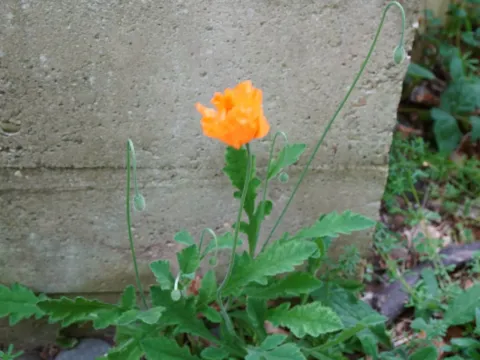
Atlantic poppy
Papaver atlanticum
Sowing of the Atlantic poppy is typically carried out in early spring when the soil temperature reaches +10...+12 degrees Celsius. For early flowering, seeds are sown in open ground immediately after the snow melts, as the culture is quite cold-resistant.
What the section contains
Atlantic poppy
Autumn sowing is also possible, which allows for seed stratification and ensures uniform germination the following spring. In regions with mild climates, this is practiced to mimic the plant's natural growth cycle derived from its mountain origins.
Seeds of the Atlantic poppy are very small, so they should be sown at a depth of no more than 0.5–1 cm. Surface sowing often yields better results, as the seeds require sunlight to germinate successfully within the first few weeks of life.
When sowing in rows, a spacing of 30–40 cm should be maintained to ensure proper air circulation. The crop is sensitive to crowding, so thinning out seedlings is an essential step to ensure the development of robust, leafy rosettes.
Optimal plant density depends on the purpose of cultivation, whether for ornamental or research use. If seed collection is the primary goal, plants should be spaced at intervals of 20–25 cm from each other within the row.
The Atlantic poppy belongs to the Papaveraceae family and is a perennial herbaceous plant adapted to the mountainous conditions of Morocco. It prefers open, well-lit areas, as excessive shade causes the stems to stretch and bloom to decrease.
The plant has moderate soil requirements, but excellent drainage is critically important. Water stagnation in the root zone is fatal to the plant and frequently leads to the development of root rot during the early stages of development.
The plant grows successfully in light sandy or loamy soils with a neutral or slightly alkaline pH. Heavy clay soils require the pre-incorporation of sand or gravel to improve aeration and moisture permeability for the delicate root system.
The temperature regime for the Atlantic poppy is characterized by high tolerance to daily and nightly temperature fluctuations. During the active growing season, the crop requires moderate watering, but mature specimens demonstrate significant drought resistance.
For successful growth, the poppy does not require excessive amounts of mineral fertilizers. Applying small doses of organic matter during autumn soil preparation creates a favorable environment for the root system, which extends deep into the ground.
The main threat to the Atlantic poppy when cultivation practices are neglected is fungal infection, such as powdery mildew. This appears as a white coating on the leaves, significantly reducing the photosynthetic capacity of the plant.
In high-humidity conditions, there is a high probability of Fusarium or Alternaria infection. These diseases affect the plant's vascular system, which quickly leads to wilting and the subsequent death of the entire vegetative mass of the bush.
Among pests, the greatest damage is caused by the poppy weevil, whose larvae feed on seeds inside the capsules. Aphids also pose a threat by sucking sap from young flower stalks and buds, which significantly deforms their development.
To control pests, broad-spectrum insecticides are applied at the beginning of the growing season. It is crucial to carry out treatments before mass flowering begins to avoid harming pollinators, which actively visit the poppy flowers.
Disease prevention includes strict crop rotation and the removal of plant debris in the autumn. Avoiding waterlogging of the soil is a key factor in preventing root rot and maintaining the health of these perennial plantings.
Harvesting seeds of the Atlantic poppy begins after the seed capsules acquire a characteristic grey-brown hue and become dry to the touch. It is vital to catch the moment before they split open to avoid unwanted self-seeding.
Typically, harvesting is conducted in the morning hours when air humidity is minimal. The capsules are carefully cut from the flower stalks and then dried in a ventilated, dark room, protected from direct sunlight and rain.
Once dried, the seeds fall out easily from the capsules with a light shake. They are then cleaned of plant debris by winnowing or sieving through fine-mesh screens, resulting in high-quality planting material for the next season.
If the poppy is grown as an ornamental plant, it is recommended to cut the flower stalks after flowering is complete. This encourages the plant to rebloom later in the summer and prevents the bush from exhausting its energy on seed production.
Seeds should be stored in paper bags or cloth pouches in cool, dry places. Properly prepared seed material retains high germination energy for several years if the recommended storage temperature is maintained.