
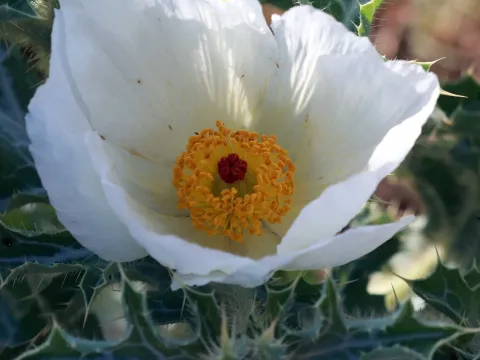
Argemone squarrosa
Argemone squarrosa
Argemone squarrosa, commonly known as a type of prickly poppy, is a member of the Papaveraceae family. It is a hardy, spiny annual or biennial plant native to arid landscapes, particularly in parts of North America.
What the section contains
Argemone squarrosa
Botanically, the plant is distinguished by its sharp prickles covering the stems and foliage, and its bright yellow latex. The flowers are typically pale yellow or creamy-white, featuring delicate petals that bloom in harsh, sun-drenched environments.
Regarding soil requirements, the species thrives in well-drained, sandy, or gravelly soils. It is highly adapted to nutrient-poor substrates and requires excellent drainage to prevent the root system from decaying during the growing season.
Climate needs are centered around full sun exposure and low to moderate rainfall. Argemone squarrosa is a true xerophyte, performing optimally in high temperatures where other plants might wilt due to moisture stress.
In terms of usage, the plant is mainly appreciated for its ornamental value in xeriscaping or rock gardens. However, it is important to note that the plant is toxic to livestock due to the presence of isoquinoline alkaloids in its tissues.
The primary threat to Argemone squarrosa is root rot, which is almost exclusively caused by excessive soil moisture or poor drainage. Maintaining a dry, airy environment is the most effective preventative measure against fungal pathogens.
Insects like aphids and spider mites can infest the foliage, especially when the plant is under stress from heat or drought. Regular monitoring and the application of horticultural soaps can help manage these populations.
While the plant is quite vigorous, initial growth can be hampered by aggressive weeds. Once established, its sharp spines and rapid growth rate allow it to outcompete most surrounding vegetation for resources.
Aggressive self-seeding is a management concern, as the plant produces a large number of seeds that can remain dormant in the soil for several years. This can turn the plant into an unwanted weed if not properly controlled in a garden setting.
Safety is a significant factor in handling this plant; the spines are extremely sharp and can cause physical injury, while the yellow latex can cause skin irritation. Using protective gear is essential for any maintenance tasks.